SOLDES
Jusqu'à -70% sur une sélection d'articles*

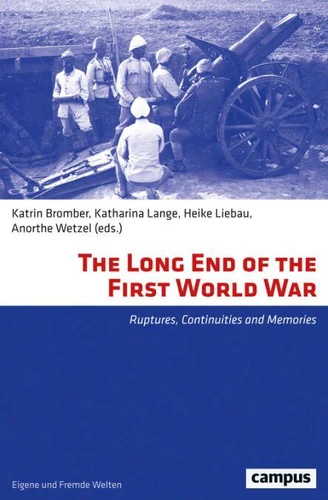
The Long End of the First World War. Ruptures, Continuities and Memories
Par : , , , ,Formats :
Disponible dans votre compte client Decitre ou Furet du Nord dès validation de votre commande. Le format PDF est :
- Compatible avec une lecture sur My Vivlio (smartphone, tablette, ordinateur)
- Compatible avec une lecture sur liseuses Vivlio
- Pour les liseuses autres que Vivlio, vous devez utiliser le logiciel Adobe Digital Edition. Non compatible avec la lecture sur les liseuses Kindle, Remarkable et Sony
 , qui est-ce ?
Notre partenaire de plateforme de lecture numérique où vous retrouverez l'ensemble de vos ebooks gratuitement
Pour en savoir plus sur nos ebooks, consultez notre aide en ligne ici
C'est si simple ! Lisez votre ebook avec l'app Vivlio sur votre tablette, mobile ou ordinateur :

- Nombre de pages296
- FormatPDF
- ISBN978-3-593-43877-1
- EAN9783593438771
- Date de parution04/10/2018
- Protection num.Digital Watermarking
- Taille10 Mo
- Infos supplémentairespdf
- ÉditeurCampus
Résumé
2014 was marked by extensive commemoration activities in many parts of the world to the First World War. This book focuses on the relation between global history and social history, highlighting actors and regions, and it systematically engages with the issue of diverse periodizations. In discussing linkages between experience, historiography, and commemoration, the contributions in this volume aim at unsettling the notion of a static and clearly defined »end« of the Great War, a construct mainly based on European developments.
How did the developments which marked the end of the War differ regionally, and how did prisoners of war, demobilized soldiers, women, or children from and in Asia, Africa, and the Middle East perceive and experience the »end« ? How did this »end« influence new networks, social movements, society, economic processes, or ecological developments? And how were these questions discussed by contemporaries? Can the loss of »Zeitzeugen« be compensated by the use of electronic and other media? And does this make transnational commemoration easier (or more difficult)? What is written out of historical narratives and what is being (re)discovered?