Why does life feel heavier even when we are "doing everything right"?The affordability crisis is usually discussed in terms of inflation, wages, and markets. But its deepest effects are not only financial - they are emotional and social. When housing costs rise, work becomes unstable, and basic security feels uncertain, people do not just adjust their budgets. They adjust their lives, relationships, and expectations.
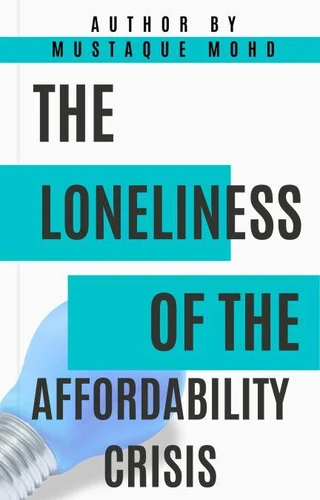
The Loneliness of the Affordability Crisis explores how constant financial pressure reshapes everyday experience. It shows how survival thinking replaces long-term planning, how exhaustion limits connection, and how shame and silence make shared struggles feel personal. Friendship becomes harder to maintain. Love feels risky. The future seems delayed. Digital connection fills gaps but cannot fully replace physical presence and shared time.
This book challenges the idea that stress and isolation are individual failures. When large numbers of people feel the same strain, the cause lies in the conditions surrounding them. Economic systems influence emotional life more than we often acknowledge. Blending social insight with human experience, this work reframes affordability not just as a policy issue, but as a relationship issue. It asks what happens to belonging when stability becomes expensive - and what it would take to build a society where living, not just surviving, is possible.
Why does life feel heavier even when we are "doing everything right"?The affordability crisis is usually discussed in terms of inflation, wages, and markets. But its deepest effects are not only financial - they are emotional and social. When housing costs rise, work becomes unstable, and basic security feels uncertain, people do not just adjust their budgets. They adjust their lives, relationships, and expectations.
The Loneliness of the Affordability Crisis explores how constant financial pressure reshapes everyday experience. It shows how survival thinking replaces long-term planning, how exhaustion limits connection, and how shame and silence make shared struggles feel personal. Friendship becomes harder to maintain. Love feels risky. The future seems delayed. Digital connection fills gaps but cannot fully replace physical presence and shared time.
This book challenges the idea that stress and isolation are individual failures. When large numbers of people feel the same strain, the cause lies in the conditions surrounding them. Economic systems influence emotional life more than we often acknowledge. Blending social insight with human experience, this work reframes affordability not just as a policy issue, but as a relationship issue. It asks what happens to belonging when stability becomes expensive - and what it would take to build a society where living, not just surviving, is possible.


 , qui est-ce ?