
Nouveauté
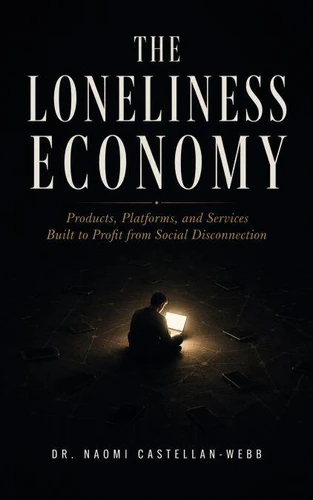
The Loneliness Economy: Products, Platforms, and Services Built to Profit from Social Disconnection
Par :Formats :
Disponible dans votre compte client Decitre ou Furet du Nord dès validation de votre commande. Le format ePub est :
- Compatible avec une lecture sur My Vivlio (smartphone, tablette, ordinateur)
- Compatible avec une lecture sur liseuses Vivlio
- Pour les liseuses autres que Vivlio, vous devez utiliser le logiciel Adobe Digital Edition. Non compatible avec la lecture sur les liseuses Kindle, Remarkable et Sony
 , qui est-ce ?
Notre partenaire de plateforme de lecture numérique où vous retrouverez l'ensemble de vos ebooks gratuitement
Pour en savoir plus sur nos ebooks, consultez notre aide en ligne ici
C'est si simple ! Lisez votre ebook avec l'app Vivlio sur votre tablette, mobile ou ordinateur :

- FormatePub
- ISBN8235914223
- EAN9798235914223
- Date de parution08/07/2026
- Protection num.pas de protection
- Infos supplémentairesepub
- ÉditeurIoakim Ioakim
Résumé
You already pay into this economy. Most people do, several times a week, without ever noticing the transaction. Every swipe on a dating app, every late-night message to a chatbot that remembers your name, every coworking membership, every subscription box for a dog treated like a firstborn child, every livestreamed dinner shared with forty strangers on a screen, sends money toward companies whose growth depends on one uncomfortable fact: the more disconnected you feel, the more they earn.
The Loneliness Economy is the book that finally follows that money all the way to the source. Dr. Naomi Castellan-Webb spent two years inside the data most of us never see, the Surgeon General advisory that called loneliness a public health emergency, the internal growth metrics of AI companion apps, the quiet financial engineering behind dating app subscription tiers, the private equity rolling up veterinary clinics and co-living startups, the eldercare robotics pilots already running in three countries.
What she found is not a conspiracy. It is something stranger and more ordinary: dozens of separate, entirely legal industries that have all discovered, independently, the same profitable truth. A satisfied customer who finds real connection and leaves is worth far less than a customer who almost finds it, again and again, forever. This is not a book that tells you to delete your apps and go outside.
It is sharper than that, and considerably more useful. Chapter by chapter, it hands you the receipts: why an AI companion's revenue per user doubled in a single year, why the dating app you have used for three years profits more from your loneliness than your happiness, why your coworking membership is priced like a gym you can never quite graduate from, why the pet industry now openly markets to people who call their dog a substitute for a child, and why a robot seal in a Swedish nursing home might be the most honest product in this entire book, because at least it never pretended to be anything else.
Every number in these pages is real and sourced. Every industry is named. Every chapter reads less like a lecture and more like the story you tell a friend after you have finally figured something out, the kind of story that makes you look at your own phone differently before you have even finished the first chapter. You will finish this book unable to open a single one of these apps the same way again.
That is not a warning. It is the reason to start reading tonight.
The Loneliness Economy is the book that finally follows that money all the way to the source. Dr. Naomi Castellan-Webb spent two years inside the data most of us never see, the Surgeon General advisory that called loneliness a public health emergency, the internal growth metrics of AI companion apps, the quiet financial engineering behind dating app subscription tiers, the private equity rolling up veterinary clinics and co-living startups, the eldercare robotics pilots already running in three countries.
What she found is not a conspiracy. It is something stranger and more ordinary: dozens of separate, entirely legal industries that have all discovered, independently, the same profitable truth. A satisfied customer who finds real connection and leaves is worth far less than a customer who almost finds it, again and again, forever. This is not a book that tells you to delete your apps and go outside.
It is sharper than that, and considerably more useful. Chapter by chapter, it hands you the receipts: why an AI companion's revenue per user doubled in a single year, why the dating app you have used for three years profits more from your loneliness than your happiness, why your coworking membership is priced like a gym you can never quite graduate from, why the pet industry now openly markets to people who call their dog a substitute for a child, and why a robot seal in a Swedish nursing home might be the most honest product in this entire book, because at least it never pretended to be anything else.
Every number in these pages is real and sourced. Every industry is named. Every chapter reads less like a lecture and more like the story you tell a friend after you have finally figured something out, the kind of story that makes you look at your own phone differently before you have even finished the first chapter. You will finish this book unable to open a single one of these apps the same way again.
That is not a warning. It is the reason to start reading tonight.