SOLDES
Jusqu'à -70% sur une sélection d'articles*

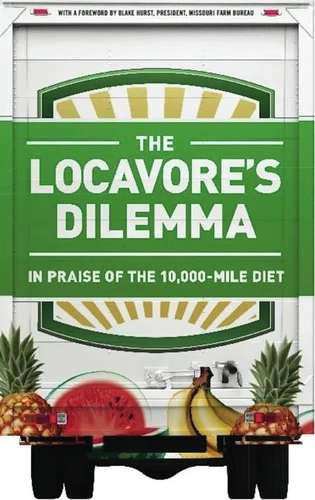
The Locavore's Dilemma. In Praise of the 10,000-mile Diet
Par : ,Formats :
Disponible dans votre compte client Decitre ou Furet du Nord dès validation de votre commande. Le format ePub protégé est :
- Compatible avec une lecture sur My Vivlio (smartphone, tablette, ordinateur)
- Compatible avec une lecture sur liseuses Vivlio
- Pour les liseuses autres que Vivlio, vous devez utiliser le logiciel Adobe Digital Edition. Non compatible avec la lecture sur les liseuses Kindle, Remarkable et Sony
- Non compatible avec un achat hors France métropolitaine
 , qui est-ce ?
Notre partenaire de plateforme de lecture numérique où vous retrouverez l'ensemble de vos ebooks gratuitement
Pour en savoir plus sur nos ebooks, consultez notre aide en ligne ici
C'est si simple ! Lisez votre ebook avec l'app Vivlio sur votre tablette, mobile ou ordinateur :

- Nombre de pages288
- FormatePub
- ISBN978-1-58648-941-0
- EAN9781586489410
- Date de parution04/06/2012
- Protection num.Adobe DRM
- Infos supplémentairesepub
- ÉditeurPublicAffairs
Résumé
A new generation of food activists has come to believe that "sustainable farming" and "eating local" are the way to solve a host of perceived problems with our modern food supply system. By combining healthy eating and a high standard of environmental stewardship, these locavores think, we can also deliver important economic benefits and increase food security within local economies. But after a thorough review of the evidence, economic geographer Pierre Desrochers and policy analyst Hiroko Shimizu have concluded these claims are mistaken.
In The Locavore's Dilemma, they explain the history, science, and economics of food supply to reveal what locavores miss or misunderstand: the real environmental impacts of agricultural production; the drudgery of subsistence farming; and the essential role large-scale, industrial producers play in making food more available, varied, affordable, and nutritionally rich than ever before in history. At best, they show, locavorism is a well-meaning marketing fad among the world's most privileged consumers.
At worst, it constitutes a dangerous distraction from solving serious global food issues. Deliberately provocative, but based on scrupulous research and incontrovertible scientific evidence, The Locavore's Dilemma proves that: Our modern food-supply chain is a superior alternative that has evolved through constant competition and ever-more-rigorous efficiency. A world food chain characterized by free trade and the absence of agricultural subsidies would deliver lower prices and more variety in a manner that is both economically and environmentally more sustainable.
There is no need to feel guilty for not joining the locavores on their crusade. Eating globally, not only locally, is the way to save the planet.
In The Locavore's Dilemma, they explain the history, science, and economics of food supply to reveal what locavores miss or misunderstand: the real environmental impacts of agricultural production; the drudgery of subsistence farming; and the essential role large-scale, industrial producers play in making food more available, varied, affordable, and nutritionally rich than ever before in history. At best, they show, locavorism is a well-meaning marketing fad among the world's most privileged consumers.
At worst, it constitutes a dangerous distraction from solving serious global food issues. Deliberately provocative, but based on scrupulous research and incontrovertible scientific evidence, The Locavore's Dilemma proves that: Our modern food-supply chain is a superior alternative that has evolved through constant competition and ever-more-rigorous efficiency. A world food chain characterized by free trade and the absence of agricultural subsidies would deliver lower prices and more variety in a manner that is both economically and environmentally more sustainable.
There is no need to feel guilty for not joining the locavores on their crusade. Eating globally, not only locally, is the way to save the planet.
A propos de Pierre Desrochers


Les neuf dragons
E-book
8,49 €