SOLDES
Jusqu'à -70% sur une sélection d'articles*

Nouveauté
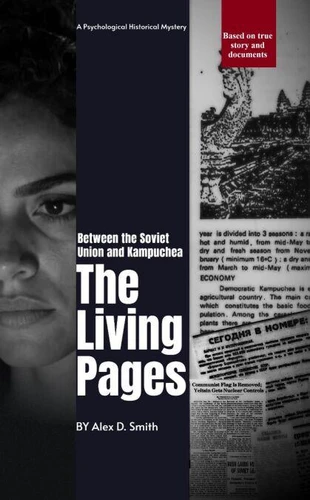
The Living Pages: Between the Soviet Union and Kampuchea
Par :Formats :
Disponible dans votre compte client Decitre ou Furet du Nord dès validation de votre commande. Le format ePub est :
- Compatible avec une lecture sur My Vivlio (smartphone, tablette, ordinateur)
- Compatible avec une lecture sur liseuses Vivlio
- Pour les liseuses autres que Vivlio, vous devez utiliser le logiciel Adobe Digital Edition. Non compatible avec la lecture sur les liseuses Kindle, Remarkable et Sony
 , qui est-ce ?
Notre partenaire de plateforme de lecture numérique où vous retrouverez l'ensemble de vos ebooks gratuitement
Pour en savoir plus sur nos ebooks, consultez notre aide en ligne ici
C'est si simple ! Lisez votre ebook avec l'app Vivlio sur votre tablette, mobile ou ordinateur :

- FormatePub
- ISBN8235095984
- EAN9798235095984
- Date de parution13/05/2026
- Protection num.pas de protection
- Infos supplémentairesepub
- ÉditeurIoakim Ioakim
Résumé
A Psychological Historical MysteryBetween the Soviet Union and Kampuchea In the course of her university studies, Isabella develops a genuine interest in twentieth-century history. What begins as academic curiosity leads her first to Stalin's Soviet Union, and later to the history of the Khmer Rouge - a subject that fascinates her with its complexity and unanswered questions. While looking for additional reading online, she comes across a rare historical book listed for sale on eBay.
It is an obscure work about the Khmer Rouge, long out of print and rarely cited in modern research. For Isabella, it feels like a fortunate discovery - a chance to deepen her understanding of a subject she is genuinely drawn to. As she begins reading, she is struck by the depth and specificity of the material. The book references events, testimonies, and details that are difficult to trace in mainstream historical sources.
Some passages present perspectives that feel unusually vivid, almost personal in their tone. At first, she treats it as an interesting but unconventional historical account - a supplement to her studies rather than something unusual. But over time, small inconsistencies begin to stand out. The way certain events are described feels slightly too precise, too intimate, as if the author had access to more than just official records.
What started as academic interest slowly turns into a quiet sense of uncertainty about the boundaries between recorded history and how it is remembered. Some books simply collect history. Others make you reconsider how fragile that history really is.
It is an obscure work about the Khmer Rouge, long out of print and rarely cited in modern research. For Isabella, it feels like a fortunate discovery - a chance to deepen her understanding of a subject she is genuinely drawn to. As she begins reading, she is struck by the depth and specificity of the material. The book references events, testimonies, and details that are difficult to trace in mainstream historical sources.
Some passages present perspectives that feel unusually vivid, almost personal in their tone. At first, she treats it as an interesting but unconventional historical account - a supplement to her studies rather than something unusual. But over time, small inconsistencies begin to stand out. The way certain events are described feels slightly too precise, too intimate, as if the author had access to more than just official records.
What started as academic interest slowly turns into a quiet sense of uncertainty about the boundaries between recorded history and how it is remembered. Some books simply collect history. Others make you reconsider how fragile that history really is.