
Arie de Geus worked for Royal Dutch/Shell for thirty-eight years and is widely credited with originating the concept of the learning organization. Since his retirement, he has advised many government and private institutions and has lectured throughout the world.
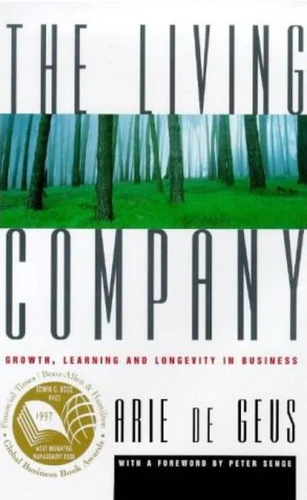
The Living Company
Par :Formats :
Disponible dans votre compte client Decitre ou Furet du Nord dès validation de votre commande. Le format ePub protégé est :
- Compatible avec une lecture sur My Vivlio (smartphone, tablette, ordinateur)
- Compatible avec une lecture sur liseuses Vivlio
- Pour les liseuses autres que Vivlio, vous devez utiliser le logiciel Adobe Digital Edition. Non compatible avec la lecture sur les liseuses Kindle, Remarkable et Sony
- Non compatible avec un achat hors France métropolitaine
 , qui est-ce ?
Notre partenaire de plateforme de lecture numérique où vous retrouverez l'ensemble de vos ebooks gratuitement
Pour en savoir plus sur nos ebooks, consultez notre aide en ligne ici
C'est si simple ! Lisez votre ebook avec l'app Vivlio sur votre tablette, mobile ou ordinateur :

- Nombre de pages224
- FormatePub
- ISBN978-1-85788-423-4
- EAN9781857884234
- Date de parution11/01/2011
- Protection num.Adobe DRM
- Infos supplémentairesepub
- ÉditeurJohn Murray Business
Résumé
In The Living Company, the man who introduced the revolutionary concept of the learning organization has turned his attention to identifying the critical characteristics of organizational longevity. Arie de Geus reveals the keys to managing for a long and prosperous organizational life. He draws a sharp distinction between "living companies, " the purpose of which is to fulfill their potential and perpetuate themselves as ongoing communities, and "economic companies, " which are in business solely to produc wealth for a small group of individuals.
He shows clearly that living companies manage for survival; economic companies manage for profit. With nearly 40 years of experience at Royal Dutch/Shell, where he was involved firsthand with implementing the renowned scenario planning technique, de Geus describes how he came to explore and understand the special qualities of living companies. Among a wide array of important factors, long-lived companies have four essential traits in common.
At a minimum, these firms are sensitive to their environment in order to learn and adapt; cohesive, with a strong sense of identity; tolerant of unconventional thinking and experimentation; and conservative in financial policy to retain the resources that allow for flexibility.
He shows clearly that living companies manage for survival; economic companies manage for profit. With nearly 40 years of experience at Royal Dutch/Shell, where he was involved firsthand with implementing the renowned scenario planning technique, de Geus describes how he came to explore and understand the special qualities of living companies. Among a wide array of important factors, long-lived companies have four essential traits in common.
At a minimum, these firms are sensitive to their environment in order to learn and adapt; cohesive, with a strong sense of identity; tolerant of unconventional thinking and experimentation; and conservative in financial policy to retain the resources that allow for flexibility.