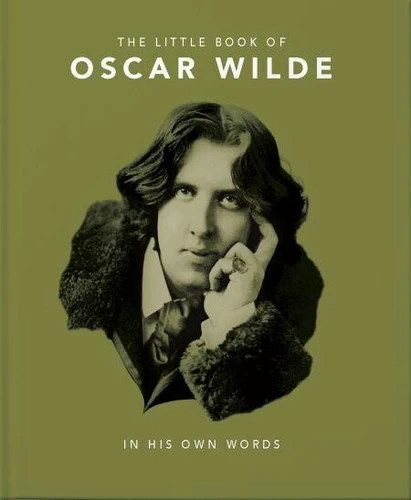
Flamboyant and witty, Oscar Wilde was famous for being famous. The toast of late-nineteenth London society, he once boasted he could speak spontaneously on any subject, and his writings were as varied as his captivating conversation. One of the leading playwrights of his age, he also found fame as a poet, novelist and essayist. Of course, Wilde's literary success is bound up with the tragedy of his private life, and his very name evokes fascination.
Including Wilde's funniest remarks and ripostes as well as deeper reflections, this collection of wit and wisdom will amuse, provoke and delight. 'There is only one thing in the world worse than being talked about, and that is not being talked about.' Lord Henry in The Picture of Dorian Gray, 1890. 'Yes: I am a dreamer. For a dreamer is one who can only find his way by moonlight, and his punishment is that he sees the dawn before the rest of the world.' Intentions, 'The Critic as Artist', 1891.
Flamboyant and witty, Oscar Wilde was famous for being famous. The toast of late-nineteenth London society, he once boasted he could speak spontaneously on any subject, and his writings were as varied as his captivating conversation. One of the leading playwrights of his age, he also found fame as a poet, novelist and essayist. Of course, Wilde's literary success is bound up with the tragedy of his private life, and his very name evokes fascination.
Including Wilde's funniest remarks and ripostes as well as deeper reflections, this collection of wit and wisdom will amuse, provoke and delight. 'There is only one thing in the world worse than being talked about, and that is not being talked about.' Lord Henry in The Picture of Dorian Gray, 1890. 'Yes: I am a dreamer. For a dreamer is one who can only find his way by moonlight, and his punishment is that he sees the dawn before the rest of the world.' Intentions, 'The Critic as Artist', 1891.


 , qui est-ce ?