That said, this book-length essay is still worth reading as a fascinating social history of its times and for its warm evocation of the elements of the English character, some of which linger on, some of which have disappeared.
The Lion and the Unicorn. "Socialism and the English Genius"
Par :Formats :
Disponible dans votre compte client Decitre ou Furet du Nord dès validation de votre commande. Le format ePub est :
- Compatible avec une lecture sur My Vivlio (smartphone, tablette, ordinateur)
- Compatible avec une lecture sur liseuses Vivlio
- Pour les liseuses autres que Vivlio, vous devez utiliser le logiciel Adobe Digital Edition. Non compatible avec la lecture sur les liseuses Kindle, Remarkable et Sony
 , qui est-ce ?
Notre partenaire de plateforme de lecture numérique où vous retrouverez l'ensemble de vos ebooks gratuitement
Pour en savoir plus sur nos ebooks, consultez notre aide en ligne ici
C'est si simple ! Lisez votre ebook avec l'app Vivlio sur votre tablette, mobile ou ordinateur :

- Nombre de pages100
- FormatePub
- ISBN978-625-7120-88-3
- EAN9786257120883
- Date de parution27/11/2023
- Protection num.Digital Watermarking
- Taille739 Ko
- Infos supplémentairesepub
- ÉditeurE-Kitap Projesi & Cheapest Boo
Résumé
The Lion and the Unicorn: Socialism and the English Genius was published in February 1941, well into the Second World War, after Dunkirk and the Battle of Britain. It is a long essay, divided into three parts. 1. England Your England (35 pages) 2. Shopkeepers at War (19 pages) 3. The English Revolution (9 pages) The three essays 1. describe the essence of Englishness and records changes in English society over the previous thirty years or so 2.
make the case for a socialist system in England 3. argue for an English democratic socialism, sharply distinct from the totalitarian communism of Stalin. Now, at this distance of 76 years, the political content seems to me almost completely useless. After the war, the socialist policies carried out by Attlee's government, thirty years of 'Butskellism' and Britain's steady industrial decline into the 1970s which was brutally arrested by Mrs Thatcher's radical economic and social policies of the 1980s, followed by Tony Blair's attempt to create a non-socialist Labour Party in the 1990s, and all the time the enormous social transformations wrought by ever-changing technology - the political, social, economic, technological and cultural character of England has been transformed out of all recognition.
That said, this book-length essay is still worth reading as a fascinating social history of its times and for its warm evocation of the elements of the English character, some of which linger on, some of which have disappeared.
make the case for a socialist system in England 3. argue for an English democratic socialism, sharply distinct from the totalitarian communism of Stalin. Now, at this distance of 76 years, the political content seems to me almost completely useless. After the war, the socialist policies carried out by Attlee's government, thirty years of 'Butskellism' and Britain's steady industrial decline into the 1970s which was brutally arrested by Mrs Thatcher's radical economic and social policies of the 1980s, followed by Tony Blair's attempt to create a non-socialist Labour Party in the 1990s, and all the time the enormous social transformations wrought by ever-changing technology - the political, social, economic, technological and cultural character of England has been transformed out of all recognition.
That said, this book-length essay is still worth reading as a fascinating social history of its times and for its warm evocation of the elements of the English character, some of which linger on, some of which have disappeared.
A propos de George Orwell
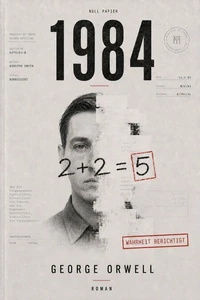
1984
E-book
0,99 €
4,99 €

9,95 €
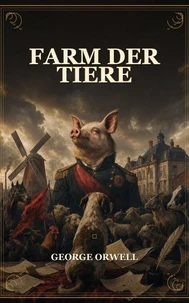
Farm der Tiere
E-book
0,49 €
5,07 €

4,46 €

4,99 €
1984: 75th Anniversary
E-book
0,49 €
0,49 €