SOLDES
Jusqu'à -70% sur une sélection d'articles*
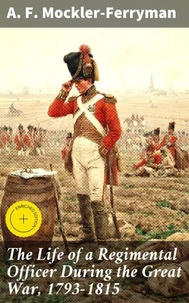
The Life of a Regimental Officer During the Great War, 1793-1815
Par :Formats :
Disponible dans votre compte client Decitre ou Furet du Nord dès validation de votre commande. Le format ePub est :
- Compatible avec une lecture sur My Vivlio (smartphone, tablette, ordinateur)
- Compatible avec une lecture sur liseuses Vivlio
- Pour les liseuses autres que Vivlio, vous devez utiliser le logiciel Adobe Digital Edition. Non compatible avec la lecture sur les liseuses Kindle, Remarkable et Sony
 , qui est-ce ?
Notre partenaire de plateforme de lecture numérique où vous retrouverez l'ensemble de vos ebooks gratuitement
Pour en savoir plus sur nos ebooks, consultez notre aide en ligne ici
C'est si simple ! Lisez votre ebook avec l'app Vivlio sur votre tablette, mobile ou ordinateur :

- Nombre de pages274
- FormatePub
- ISBN859-65--4732677-9
- EAN8596547326779
- Date de parution16/09/2022
- Protection num.Digital Watermarking
- Taille578 Ko
- Infos supplémentairesepub
- ÉditeurDIGICAT
Résumé
A. F. Mockler-Ferryman's "The Life of a Regimental Officer During the Great War, 1793-1815" offers a meticulous examination of the multifaceted experiences faced by regimental officers during an era marked by intense military conflict and transformation. Using a narrative style rich with detailed accounts and personal anecdotes, Mockler-Ferryman deftly weaves together historical data with vivid representations of life on the battlefield and in encampments.
This compelling work situates itself within the broader context of military history and social dynamics, highlighting the oft-overlooked human dimensions of warfare and the institutional structures that shaped a generation of military leaders. Mockler-Ferryman, a prominent British military historian, draws on extensive archival research and personal family connections to the military, affording him a unique perspective on the subjects discussed.
His background informs not only his narrative style but also his deep understanding of the era's social fabric and challenges, shedding light on the officer's role amidst the geopolitical upheaval that characterized the Napoleonic Wars. This book is highly recommended for scholars and enthusiasts of military history alike, offering profound insights into the psyche of regimental officers and the complexities of their world.
By providing a blend of personal stories and rigorous historical analysis, Mockler-Ferryman invites readers to explore the nuanced realities of war, making this work an invaluable addition to any historical library.
This compelling work situates itself within the broader context of military history and social dynamics, highlighting the oft-overlooked human dimensions of warfare and the institutional structures that shaped a generation of military leaders. Mockler-Ferryman, a prominent British military historian, draws on extensive archival research and personal family connections to the military, affording him a unique perspective on the subjects discussed.
His background informs not only his narrative style but also his deep understanding of the era's social fabric and challenges, shedding light on the officer's role amidst the geopolitical upheaval that characterized the Napoleonic Wars. This book is highly recommended for scholars and enthusiasts of military history alike, offering profound insights into the psyche of regimental officers and the complexities of their world.
By providing a blend of personal stories and rigorous historical analysis, Mockler-Ferryman invites readers to explore the nuanced realities of war, making this work an invaluable addition to any historical library.