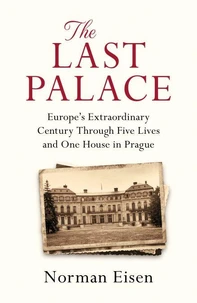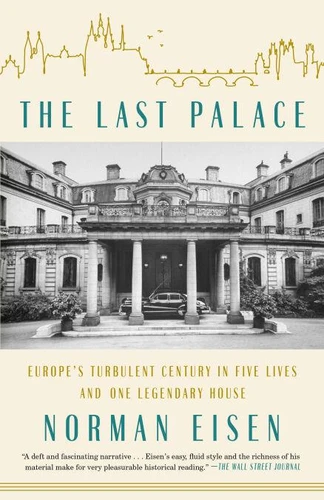
The Last Palace. Europe's Turbulent Century in Five Lives and One Legendary House
Par :Formats :
Disponible dans votre compte client Decitre ou Furet du Nord dès validation de votre commande. Le format ePub protégé est :
- Compatible avec une lecture sur My Vivlio (smartphone, tablette, ordinateur)
- Compatible avec une lecture sur liseuses Vivlio
- Pour les liseuses autres que Vivlio, vous devez utiliser le logiciel Adobe Digital Edition. Non compatible avec la lecture sur les liseuses Kindle, Remarkable et Sony
- Non compatible avec un achat hors France métropolitaine
 , qui est-ce ?
Notre partenaire de plateforme de lecture numérique où vous retrouverez l'ensemble de vos ebooks gratuitement
Pour en savoir plus sur nos ebooks, consultez notre aide en ligne ici
C'est si simple ! Lisez votre ebook avec l'app Vivlio sur votre tablette, mobile ou ordinateur :

- Nombre de pages416
- FormatePub
- ISBN978-0-451-49580-8
- EAN9780451495808
- Date de parution04/09/2018
- Protection num.Adobe DRM
- Taille16 Mo
- Infos supplémentairesepub
- ÉditeurCrown
Résumé
A sweeping yet intimate narrative about the last hundred years of turbulent European history, as seen through one of Mitteleuropa's greatest houses-and the lives of its occupants When Norman Eisen moved into the US ambassador's residence in Prague, returning to the land his mother had fled after the Holocaust, he was startled to discover swastikas hidden beneath the furniture in his new home. These symbols of Nazi Germany were remnants of the residence's forgotten history, and evidence that we never live far from the past.
From that discovery unspooled the twisting, captivating tale of four of the remarkable people who had called this palace home. Their story is Europe's, and The Last Palace chronicles the upheavals that transformed the continent over the past century. There was the optimistic Jewish financial baron, Otto Petschek, who built the palace after World War I as a statement of his faith in democracy, only to have that faith shattered; Rudolf Toussaint, the cultured, compromised German general who occupied the palace during World War II, ultimately putting his life at risk to save the house and Prague itself from destruction; Laurence Steinhardt, the first postwar US ambassador whose quixotic struggle to keep the palace out of Communist hands was paired with his pitched efforts to rescue the country from Soviet domination; and Shirley Temple Black, an eyewitness to the crushing of the 1968 Prague Spring by Soviet tanks, who determined to return to Prague and help end totalitarianism-and did just that as US ambassador in 1989.
Weaving in the life of Eisen's own mother to demonstrate how those without power and privilege moved through history, The Last Palace tells the dramatic and surprisingly cyclical tale of the triumph of liberal democracy.
From that discovery unspooled the twisting, captivating tale of four of the remarkable people who had called this palace home. Their story is Europe's, and The Last Palace chronicles the upheavals that transformed the continent over the past century. There was the optimistic Jewish financial baron, Otto Petschek, who built the palace after World War I as a statement of his faith in democracy, only to have that faith shattered; Rudolf Toussaint, the cultured, compromised German general who occupied the palace during World War II, ultimately putting his life at risk to save the house and Prague itself from destruction; Laurence Steinhardt, the first postwar US ambassador whose quixotic struggle to keep the palace out of Communist hands was paired with his pitched efforts to rescue the country from Soviet domination; and Shirley Temple Black, an eyewitness to the crushing of the 1968 Prague Spring by Soviet tanks, who determined to return to Prague and help end totalitarianism-and did just that as US ambassador in 1989.
Weaving in the life of Eisen's own mother to demonstrate how those without power and privilege moved through history, The Last Palace tells the dramatic and surprisingly cyclical tale of the triumph of liberal democracy.