
It just started with a thought, i get inspired for writing during pandemic time in my free time. About me, i am a Hr professional with 12 years of experience. I was found of reading books. here i got an idea to write for me as well.
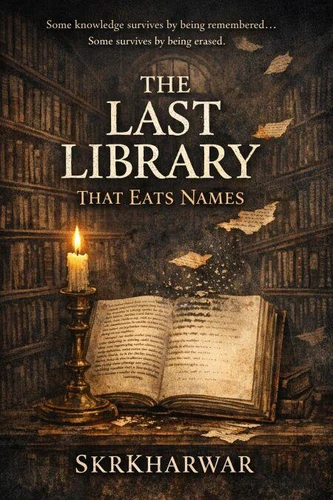
The Last Library That Eats Name's
Par :Formats :
Disponible dans votre compte client Decitre ou Furet du Nord dès validation de votre commande. Le format ePub est :
- Compatible avec une lecture sur My Vivlio (smartphone, tablette, ordinateur)
- Compatible avec une lecture sur liseuses Vivlio
- Pour les liseuses autres que Vivlio, vous devez utiliser le logiciel Adobe Digital Edition. Non compatible avec la lecture sur les liseuses Kindle, Remarkable et Sony
 , qui est-ce ?
Notre partenaire de plateforme de lecture numérique où vous retrouverez l'ensemble de vos ebooks gratuitement
Pour en savoir plus sur nos ebooks, consultez notre aide en ligne ici
C'est si simple ! Lisez votre ebook avec l'app Vivlio sur votre tablette, mobile ou ordinateur :

- FormatePub
- ISBN8232269555
- EAN9798232269555
- Date de parution19/02/2026
- Protection num.pas de protection
- Infos supplémentairesepub
- ÉditeurDraft2Digital
Résumé
Some knowledge survives by being remembered. Some survives by erasing the names attached to it. At an elite university built on silence and prestige, a forgotten library preserves forbidden knowledge by consuming identities. Every truth has a cost-and that cost is a name. When scholarship student Elira Voss notices a professor vanish without explanation, she uncovers a system older than the institution itself: a secret archive that rewrites history to keep it "stable." Scholars who challenge dominant narratives are not silenced-they are edited, reduced to footnotes, margins, and eventually, nothing at all.
Elira is different. She remembers. As she descends into a world of erasure masked as preservation, Elira must decide whether knowledge is worth saving if it survives only by disappearing people. When her closest friend chooses rebellion over safety, the fight shifts from secrecy to exposure, from individual resistance to collective awakening. What follows is not a revolution of slogans and protests-but one of readers, margins, annotations, and memory itself. The Last Library That Eats Names is a dark academia literary fantasy about power, erasure, and the politics of remembering.
Set within an Indian university shaped by colonial legacies and academic elitism, the novel explores how institutions maintain authority by deciding whose knowledge counts-and whose existence can be erased without consequence. Through Elira's journey from witness to disruptor, the story traces the collapse of a system that depends on quiet compliance. As secret archives unravel and a counter-archive emerges, the novel asks a haunting question:If history survives, but people don't-what have we really preserved? Why Readers Will Love This Book ?? Dark Academia Aesthetic - Secret libraries, forbidden texts, whispered footnotes, and candlelit corridors ?? Intellectual Thriller - High-stakes ideas, slow-burn dread, and psychological tension ? Literary & Relevant - Explores censorship, colonial memory, academic power, and institutional silence ?? Character-Driven - Friendship, sacrifice, and moral choice at the heart of rebellion ?? Global & Original - A fresh non-Western academic setting rarely seen in the genre Perfect for readers who loved The Secret History, If We Were Villains, Babel, and Piranesi-but want something sharper, quieter, and deeply unsettling.
Dark academia meets institutional horror. A library that eats names. A girl who remembers them all.
Elira is different. She remembers. As she descends into a world of erasure masked as preservation, Elira must decide whether knowledge is worth saving if it survives only by disappearing people. When her closest friend chooses rebellion over safety, the fight shifts from secrecy to exposure, from individual resistance to collective awakening. What follows is not a revolution of slogans and protests-but one of readers, margins, annotations, and memory itself. The Last Library That Eats Names is a dark academia literary fantasy about power, erasure, and the politics of remembering.
Set within an Indian university shaped by colonial legacies and academic elitism, the novel explores how institutions maintain authority by deciding whose knowledge counts-and whose existence can be erased without consequence. Through Elira's journey from witness to disruptor, the story traces the collapse of a system that depends on quiet compliance. As secret archives unravel and a counter-archive emerges, the novel asks a haunting question:If history survives, but people don't-what have we really preserved? Why Readers Will Love This Book ?? Dark Academia Aesthetic - Secret libraries, forbidden texts, whispered footnotes, and candlelit corridors ?? Intellectual Thriller - High-stakes ideas, slow-burn dread, and psychological tension ? Literary & Relevant - Explores censorship, colonial memory, academic power, and institutional silence ?? Character-Driven - Friendship, sacrifice, and moral choice at the heart of rebellion ?? Global & Original - A fresh non-Western academic setting rarely seen in the genre Perfect for readers who loved The Secret History, If We Were Villains, Babel, and Piranesi-but want something sharper, quieter, and deeply unsettling.
Dark academia meets institutional horror. A library that eats names. A girl who remembers them all.
A propos de SkrKharwar
5,49 €
5,49 €
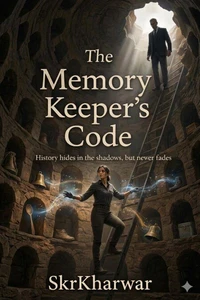
The Memory Keeper's Code
E-book
1,99 €
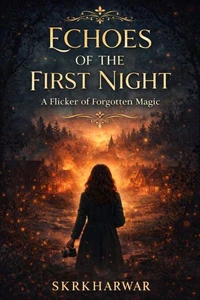
2,99 €
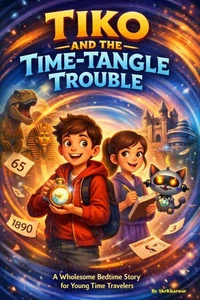
2,99 €
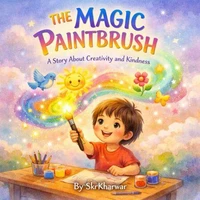
The Magic Brush
E-book
2,99 €
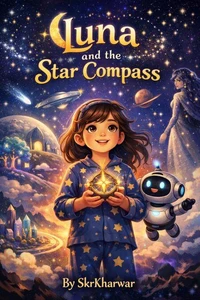
2,99 €
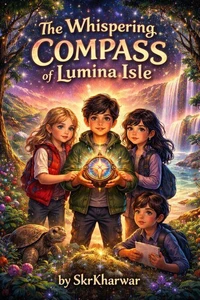
2,99 €
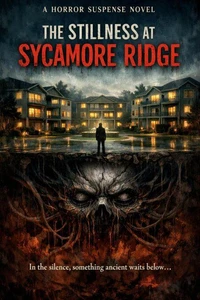
2,99 €
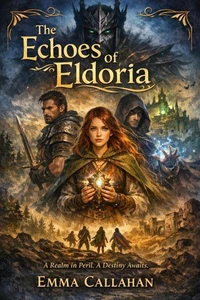
The Echoes of Eldoria
E-book
2,99 €
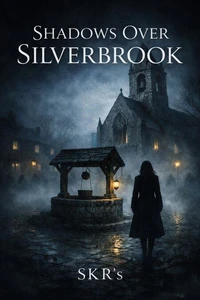
Shadows Over Silverbrook
E-book
1,99 €

1,99 €
1,99 €