SOLDES
Jusqu'à -70% sur une sélection d'articles*

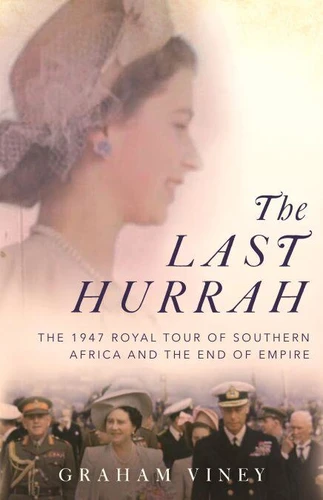
The Last Hurrah. The 1947 Royal Tour of Southern Africa and the End of Empire
Par :Formats :
Disponible dans votre compte client Decitre ou Furet du Nord dès validation de votre commande. Le format ePub protégé est :
- Compatible avec une lecture sur My Vivlio (smartphone, tablette, ordinateur)
- Compatible avec une lecture sur liseuses Vivlio
- Pour les liseuses autres que Vivlio, vous devez utiliser le logiciel Adobe Digital Edition. Non compatible avec la lecture sur les liseuses Kindle, Remarkable et Sony
- Non compatible avec un achat hors France métropolitaine
 , qui est-ce ?
Notre partenaire de plateforme de lecture numérique où vous retrouverez l'ensemble de vos ebooks gratuitement
Pour en savoir plus sur nos ebooks, consultez notre aide en ligne ici
C'est si simple ! Lisez votre ebook avec l'app Vivlio sur votre tablette, mobile ou ordinateur :

- Nombre de pages400
- FormatePub
- ISBN978-1-4721-4317-4
- EAN9781472143174
- Date de parution17/04/2019
- Protection num.Adobe DRM
- Infos supplémentairesepub
- ÉditeurRobinson
Résumé
Young Elizabeth captures in vivid detail perhaps the single-most important formative experience in Queen Elizabeth's life, the 1947 royal tour of southern Africa with her parents King George VI, Queen Elizabeth and Princess Margaret, during which she celebrated her twenty-first birthday. The year of the royal tour of southern Africa, 1947, marked both the high-water mark of the British Empire and the very moment at which it began to unravel.
Graham Viney has written an intimate, revealing portrait of the young princess on tour with her parents and sister, Princess Margaret, hard at work in the national interest, and succeeding triumphantly against all odds. In the words of Rian Malan, South African author of My Traitor's Heart, it is 'a story about a country teetering on the brink of convulsive change and yet almost united, at least for a moment, by love for a king and queen who weren't really ours.' The year 1947 was a pivotal moment not just in the history of the Union of South Africa, but of the British Empire itself.
Later that same year India gained independence and just one year later the Afrikaner Nationalist victory in South Africa would lead inexorably to the Republic of South Africa in 1961 and its departure from the Commonwealth. The present Queen Elizabeth must have learned a great deal about statecraft from her father, and about duty, tact and hard work from both her parents in the course of this three-month tour, during which the then princess celebrated her twenty-first birthday.
It was also the family's first real experience of multiculturalism. Graham Viney's book gives us an intimate and revealing portrait of the royal family, while also superbly capturing a moment in the life of a fractious, recently formed 'nation', before its descent into over four decades of darkness. The royal family travelled ceaselessly, from February to April, on a specially commissioned, white-and-gold train, meeting thousands of people at every stop along the way.
The tour was a show of imperial solidarity and a recognition of South Africa's contribution to the Allied cause during the Second World War, specifically that of South African prime minister Jan Smuts, who had served in both British war cabinets. Young Elizabeth draws skilfully on many diverse sources, not least the Royal Archive at Windsor, and includes many photographs of the royal family not previously published, such as stills from film footage held by the South African National Film, Video and Sound Archives in Pretoria.
Graham Viney has written an intimate, revealing portrait of the young princess on tour with her parents and sister, Princess Margaret, hard at work in the national interest, and succeeding triumphantly against all odds. In the words of Rian Malan, South African author of My Traitor's Heart, it is 'a story about a country teetering on the brink of convulsive change and yet almost united, at least for a moment, by love for a king and queen who weren't really ours.' The year 1947 was a pivotal moment not just in the history of the Union of South Africa, but of the British Empire itself.
Later that same year India gained independence and just one year later the Afrikaner Nationalist victory in South Africa would lead inexorably to the Republic of South Africa in 1961 and its departure from the Commonwealth. The present Queen Elizabeth must have learned a great deal about statecraft from her father, and about duty, tact and hard work from both her parents in the course of this three-month tour, during which the then princess celebrated her twenty-first birthday.
It was also the family's first real experience of multiculturalism. Graham Viney's book gives us an intimate and revealing portrait of the royal family, while also superbly capturing a moment in the life of a fractious, recently formed 'nation', before its descent into over four decades of darkness. The royal family travelled ceaselessly, from February to April, on a specially commissioned, white-and-gold train, meeting thousands of people at every stop along the way.
The tour was a show of imperial solidarity and a recognition of South Africa's contribution to the Allied cause during the Second World War, specifically that of South African prime minister Jan Smuts, who had served in both British war cabinets. Young Elizabeth draws skilfully on many diverse sources, not least the Royal Archive at Windsor, and includes many photographs of the royal family not previously published, such as stills from film footage held by the South African National Film, Video and Sound Archives in Pretoria.