SOLDES
Jusqu'à -70% sur une sélection d'articles*

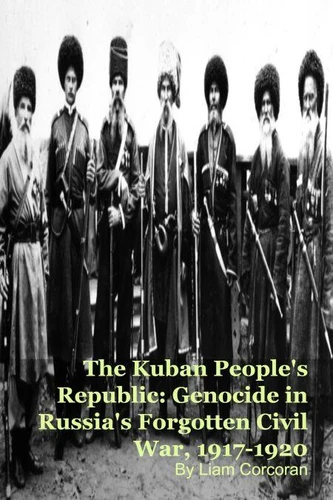
The Kuban People's Republic: Genocide in Russia's Forgotten Civil War, 1917-1920
Par :Formats :
Disponible dans votre compte client Decitre ou Furet du Nord dès validation de votre commande. Le format ePub est :
- Compatible avec une lecture sur My Vivlio (smartphone, tablette, ordinateur)
- Compatible avec une lecture sur liseuses Vivlio
- Pour les liseuses autres que Vivlio, vous devez utiliser le logiciel Adobe Digital Edition. Non compatible avec la lecture sur les liseuses Kindle, Remarkable et Sony
 , qui est-ce ?
Notre partenaire de plateforme de lecture numérique où vous retrouverez l'ensemble de vos ebooks gratuitement
Pour en savoir plus sur nos ebooks, consultez notre aide en ligne ici
C'est si simple ! Lisez votre ebook avec l'app Vivlio sur votre tablette, mobile ou ordinateur :

- FormatePub
- ISBN8232331191
- EAN9798232331191
- Date de parution02/01/2026
- Protection num.pas de protection
- Infos supplémentairesepub
- ÉditeurDraft2Digital
Résumé
The Kuban People's Republic: Genocide in Russia's Forgotten Civil War, 1917-1920Between 1917 and 1920, the Kuban Cossacks established a short-lived democratic republic that sought to preserve their autonomy through constitutional governance and Ukrainian cultural identity. Born from the chaos of the Russian Revolution, the Kuban People's Republic created sophisticated political institutions, attempted federation with Ukraine, and sent diplomats to the Paris Peace Conference seeking international recognition.
Yet this democratic experiment was crushed not by the Bolsheviks it was created to resist, but by the White Russian forces that claimed to be its protectors. General Denikin's 1919 coup against the elected Rada, including the execution of military commander Kulabukhov and the probable assassination of civilian leader Mykola Riabovil, destroyed the political structures that gave Cossacks reason to fight.
The resulting mass desertions made the subsequent Bolshevik conquest inevitable. What followed was systematic destruction through decossackization terror, deportations, forced collectivization, and the 1932-1933 Holodomor famine that killed hundreds of thousands. Soviet policies deliberately erased Ukrainian cultural identity through population replacement and decades of enforced silence. This forgotten genocide reveals how authoritarian movements destroy the democratic alternatives they claim to defend, and how historical memory remains contested terrain in contemporary Russia-Ukraine conflicts.
Yet this democratic experiment was crushed not by the Bolsheviks it was created to resist, but by the White Russian forces that claimed to be its protectors. General Denikin's 1919 coup against the elected Rada, including the execution of military commander Kulabukhov and the probable assassination of civilian leader Mykola Riabovil, destroyed the political structures that gave Cossacks reason to fight.
The resulting mass desertions made the subsequent Bolshevik conquest inevitable. What followed was systematic destruction through decossackization terror, deportations, forced collectivization, and the 1932-1933 Holodomor famine that killed hundreds of thousands. Soviet policies deliberately erased Ukrainian cultural identity through population replacement and decades of enforced silence. This forgotten genocide reveals how authoritarian movements destroy the democratic alternatives they claim to defend, and how historical memory remains contested terrain in contemporary Russia-Ukraine conflicts.