SOLDES
Jusqu'à -70% sur une sélection d'articles*

Nouveauté
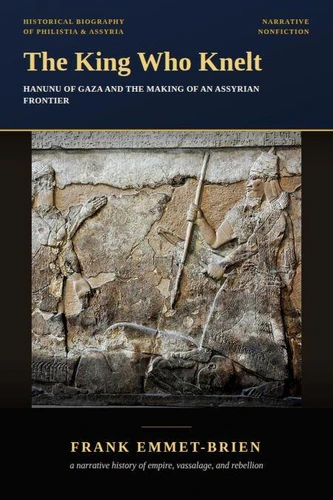
The King Who Knelt: Hanunu of Gaza and the Making of an Assyrian Frontier
Par :Formats :
Disponible dans votre compte client Decitre ou Furet du Nord dès validation de votre commande. Le format ePub est :
- Compatible avec une lecture sur My Vivlio (smartphone, tablette, ordinateur)
- Compatible avec une lecture sur liseuses Vivlio
- Pour les liseuses autres que Vivlio, vous devez utiliser le logiciel Adobe Digital Edition. Non compatible avec la lecture sur les liseuses Kindle, Remarkable et Sony
 , qui est-ce ?
Notre partenaire de plateforme de lecture numérique où vous retrouverez l'ensemble de vos ebooks gratuitement
Pour en savoir plus sur nos ebooks, consultez notre aide en ligne ici
C'est si simple ! Lisez votre ebook avec l'app Vivlio sur votre tablette, mobile ou ordinateur :

- FormatePub
- ISBN8235009127
- EAN9798235009127
- Date de parution12/07/2026
- Protection num.pas de protection
- Infos supplémentairesepub
- ÉditeurIoakim Ioakim
Résumé
The King Who Knelt: Hanunu of Gaza and the Making of an Assyrian Frontier In the eighth century BCE, the Philistine city of Gaza stood where the ancient world's richest trade routes converged, and where the newborn Assyrian Empire's ambitions ran headlong into Egypt's fading grandeur. King Hanunu inherited a city of extraordinary wealth and dangerously exposed geography, and spent his reign making the only choices such a position allowed: flight before an unstoppable army, submission dressed as divine mercy, and finally, when a contested Assyrian succession seemed to offer one last chance, a coalition and a gamble that would cost him everything.
Drawing on Assyrian royal annals, biblical tradition, and the extraordinary surviving palace reliefs of Nimrud, including the haunting image of a kneeling king beneath an emperor's sandaled foot, this book reconstructs, with equal parts rigor and narrative drive, the two crises that defined Hanunu's reign and the empire that engineered his fall. It is also, in its final chapters, the story of a city that outlived him: how Gaza, rebuilt under new and more compliant rulers, became one of Assyria's most rewarded frontier allies.
A gripping account of small-state survival at empire's edge, and a meditation on what history remembers, and what, and whom, it lets fall silent.
Drawing on Assyrian royal annals, biblical tradition, and the extraordinary surviving palace reliefs of Nimrud, including the haunting image of a kneeling king beneath an emperor's sandaled foot, this book reconstructs, with equal parts rigor and narrative drive, the two crises that defined Hanunu's reign and the empire that engineered his fall. It is also, in its final chapters, the story of a city that outlived him: how Gaza, rebuilt under new and more compliant rulers, became one of Assyria's most rewarded frontier allies.
A gripping account of small-state survival at empire's edge, and a meditation on what history remembers, and what, and whom, it lets fall silent.