
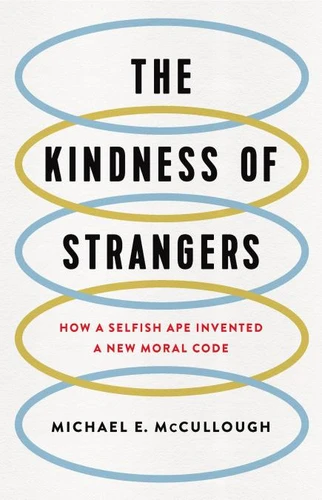
The Kindness of Strangers. How a Selfish Ape Invented a New Moral Code
Par :Formats :
Disponible dans votre compte client Decitre ou Furet du Nord dès validation de votre commande. Le format ePub protégé est :
- Compatible avec une lecture sur My Vivlio (smartphone, tablette, ordinateur)
- Compatible avec une lecture sur liseuses Vivlio
- Pour les liseuses autres que Vivlio, vous devez utiliser le logiciel Adobe Digital Edition. Non compatible avec la lecture sur les liseuses Kindle, Remarkable et Sony
- Non compatible avec un achat hors France métropolitaine
 , qui est-ce ?
Notre partenaire de plateforme de lecture numérique où vous retrouverez l'ensemble de vos ebooks gratuitement
Pour en savoir plus sur nos ebooks, consultez notre aide en ligne ici
C'est si simple ! Lisez votre ebook avec l'app Vivlio sur votre tablette, mobile ou ordinateur :

- Nombre de pages368
- FormatePub
- ISBN978-1-5416-1752-0
- EAN9781541617520
- Date de parution11/05/2020
- Protection num.Adobe DRM
- Infos supplémentairesepub
- ÉditeurBasic Books
Résumé
"A fine achievement."--Peter Singer, author of The Life You Can Save and The Most Good You Can Do A sweeping psychological history of human goodness -- from the foundations of evolution to the modern political and social challenges humanity is now facing. How did humans, a species of self-centered apes, come to care about others? Since Darwin, scientists have tried to answer this question using evolutionary theory.
In The Kindness of Strangers, psychologist Michael E. McCullough shows why they have failed and offers a new explanation instead. From the moment nomadic humans first settled down until the aftermath of the Second World War, our species has confronted repeated crises that we could only survive by changing our behavior. As McCullough argues, these choices weren't enabled by an evolved moral sense, but with moral invention -- driven not by evolution's dictates but by reason.
Today's challenges -- climate change, mass migration, nationalism -- are some of humanity's greatest yet. In revealing how past crises shaped the foundations of human concern, The Kindness of Strangers offers clues for how we can adapt our moral thinking to survive these challenges as well.
In The Kindness of Strangers, psychologist Michael E. McCullough shows why they have failed and offers a new explanation instead. From the moment nomadic humans first settled down until the aftermath of the Second World War, our species has confronted repeated crises that we could only survive by changing our behavior. As McCullough argues, these choices weren't enabled by an evolved moral sense, but with moral invention -- driven not by evolution's dictates but by reason.
Today's challenges -- climate change, mass migration, nationalism -- are some of humanity's greatest yet. In revealing how past crises shaped the foundations of human concern, The Kindness of Strangers offers clues for how we can adapt our moral thinking to survive these challenges as well.