SOLDES
Jusqu'à -70% sur une sélection d'articles*

Nouveauté
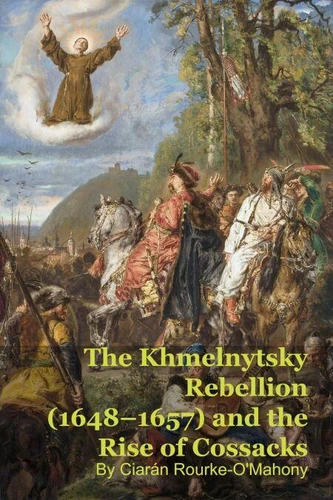
The Khmelnytsky Rebellion (1648–1657) and the Rise of Cossacks
Par :Formats :
Disponible dans votre compte client Decitre ou Furet du Nord dès validation de votre commande. Le format ePub est :
- Compatible avec une lecture sur My Vivlio (smartphone, tablette, ordinateur)
- Compatible avec une lecture sur liseuses Vivlio
- Pour les liseuses autres que Vivlio, vous devez utiliser le logiciel Adobe Digital Edition. Non compatible avec la lecture sur les liseuses Kindle, Remarkable et Sony
 , qui est-ce ?
Notre partenaire de plateforme de lecture numérique où vous retrouverez l'ensemble de vos ebooks gratuitement
Pour en savoir plus sur nos ebooks, consultez notre aide en ligne ici
C'est si simple ! Lisez votre ebook avec l'app Vivlio sur votre tablette, mobile ou ordinateur :

- FormatePub
- ISBN8235946620
- EAN9798235946620
- Date de parution29/05/2026
- Protection num.pas de protection
- Infos supplémentairesepub
- ÉditeurIoakim Ioakim
Résumé
The Khmelnytsky Rebellion (1648-1657) and the Rise of CossacksIn January 1648, Bohdan Khmelnytsky, registered Cossack officer, Jesuit-educated, veteran of Ottoman captivity, loyal Crown servant for two decades, fled to the Zaporozhian Sich with nothing but a grievance and a plan. By the following autumn, his combined Cossack-Tatar army had destroyed the two largest Polish armies in Eastern Europe, triggered a general peasant uprising across the Ukrainian borderlands, and set in motion a geopolitical transformation whose consequences shape the politics of the region to this day.
The Cossack Flame is the full story of that transformation: the uprising's causes in the structural violence of the Polish magnate system, its military and diplomatic campaigns, the catastrophic destruction of the Jewish communities of Ukraine, the founding of the Cossack Hetmanate, and the long unravelling of Khmelnytsky's achievement in the civil war known as the Ruin. What distinguishes this account is its refusal to serve any single tradition's version of events.
The Khmelnytsky Uprising has been claimed by Russian imperial historiography as the joyful reunion of the Slavic peoples, by Ukrainian nationalism as the founding moment of a nation, by Polish memory as a civilisational catastrophe, and by Jewish history as one of the defining pre-Holocaust disasters. Each of these readings is grounded in genuine historical reality. None of them is adequate to the full complexity of what actually happened.
The Cossack Flame holds all four in view simultaneously, honouring the Cossack political achievement, mourning the Jewish catastrophe, understanding the Polish loss, and examining the Russian imperial project, without allowing any single narrative to absorb the others. For readers who want to understand why Ukraine and Russia are fighting a war whose justifications are drawn directly from the seventeenth century, this is where that history begins.
The Cossack Flame is the full story of that transformation: the uprising's causes in the structural violence of the Polish magnate system, its military and diplomatic campaigns, the catastrophic destruction of the Jewish communities of Ukraine, the founding of the Cossack Hetmanate, and the long unravelling of Khmelnytsky's achievement in the civil war known as the Ruin. What distinguishes this account is its refusal to serve any single tradition's version of events.
The Khmelnytsky Uprising has been claimed by Russian imperial historiography as the joyful reunion of the Slavic peoples, by Ukrainian nationalism as the founding moment of a nation, by Polish memory as a civilisational catastrophe, and by Jewish history as one of the defining pre-Holocaust disasters. Each of these readings is grounded in genuine historical reality. None of them is adequate to the full complexity of what actually happened.
The Cossack Flame holds all four in view simultaneously, honouring the Cossack political achievement, mourning the Jewish catastrophe, understanding the Polish loss, and examining the Russian imperial project, without allowing any single narrative to absorb the others. For readers who want to understand why Ukraine and Russia are fighting a war whose justifications are drawn directly from the seventeenth century, this is where that history begins.