SOLDES
Jusqu'à -70% sur une sélection d'articles*

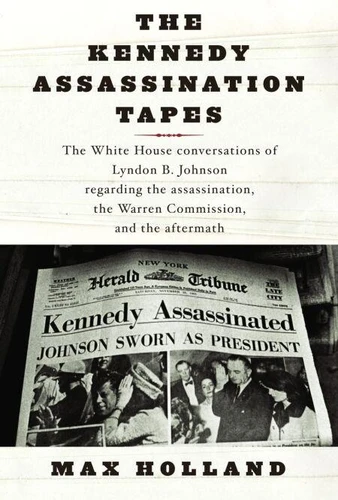
The Kennedy Assassination Tapes
Par :Formats :
Disponible dans votre compte client Decitre ou Furet du Nord dès validation de votre commande. Le format ePub protégé est :
- Compatible avec une lecture sur My Vivlio (smartphone, tablette, ordinateur)
- Compatible avec une lecture sur liseuses Vivlio
- Pour les liseuses autres que Vivlio, vous devez utiliser le logiciel Adobe Digital Edition. Non compatible avec la lecture sur les liseuses Kindle, Remarkable et Sony
- Non compatible avec un achat hors France métropolitaine
 , qui est-ce ?
Notre partenaire de plateforme de lecture numérique où vous retrouverez l'ensemble de vos ebooks gratuitement
Pour en savoir plus sur nos ebooks, consultez notre aide en ligne ici
C'est si simple ! Lisez votre ebook avec l'app Vivlio sur votre tablette, mobile ou ordinateur :

- Nombre de pages480
- FormatePub
- ISBN1-4000-4378-6
- EAN9781400043781
- Date de parution14/09/2004
- Protection num.Adobe DRM
- Taille2 Mo
- Infos supplémentairesepub
- ÉditeurKnopf
Résumé
A major work of documentary history-the brilliantly edited and annotated transcripts, most of them never before published, of the presidential conversations of Lyndon B. Johnson regarding the Kennedy assassination and its aftermath. The transition from John F. Kennedy to Johnson was arguably the most wrenching and, ultimately, one of the most bitter in the nation's history. As Johnson himself said later, "I took the oath, I became president.
But for millions of Americans I was still illegitimate, a naked man with no presidential covering, a pretender to the throne.. The whole thing was almost unbearable."In this book, Max Holland, a leading authority on the assassination and longtime Washington journalist, presents the momentous telephone calls President Johnson made and received as he sought to stabilize the country and keep the government functioning in the wake of November 22, 1963.
The transcripts begin on the day of the assassination, and reveal the often chaotic activity behind the scenes as a nation in shock struggled to come to terms with the momentous events. The transcripts illuminate Johnson's relationship with Robert F. Kennedy, which flared instantly into animosity; the genuine warmth of his dealings with Jacqueline Kennedy; his contact with the FBI and CIA directors; and the advice he sought from friends and mentors as he wrestled with the painful transition.
We eavesdrop on all the conversations-including those with leading journalists-that persuaded Johnson to abandon his initial plan to let Texas authorities investigate the assassination. Instead, we observe how he abruptly established a federal commission headed by a very reluctant chief justice of the Supreme Court, Earl Warren. We also learn how Johnson cajoled and drafted other prominent men-among them Senator Richard Russell (who detested Warren), Allen Dulles, John McCloy, and Gerald Ford-into serving.
We see a sudden president under unimaginable pressure, contending with media frenzy and speculation on a worldwide scale. We witness the flow of inaccurate information-some of it from J. Edgar Hoover-amid rumors and theories about foreign involvement. And we glimpse Johnson addressing the mounting criticism of the Warren Commission after it released its still-controversial report in September 1964.
The conversations rendered here are nearly verbatim, and have never been explained so thoroughly. No passages have been deleted except when they veered from the subject. Brought together with Holland's commentaries, they make riveting, hugely revelatory reading.
But for millions of Americans I was still illegitimate, a naked man with no presidential covering, a pretender to the throne.. The whole thing was almost unbearable."In this book, Max Holland, a leading authority on the assassination and longtime Washington journalist, presents the momentous telephone calls President Johnson made and received as he sought to stabilize the country and keep the government functioning in the wake of November 22, 1963.
The transcripts begin on the day of the assassination, and reveal the often chaotic activity behind the scenes as a nation in shock struggled to come to terms with the momentous events. The transcripts illuminate Johnson's relationship with Robert F. Kennedy, which flared instantly into animosity; the genuine warmth of his dealings with Jacqueline Kennedy; his contact with the FBI and CIA directors; and the advice he sought from friends and mentors as he wrestled with the painful transition.
We eavesdrop on all the conversations-including those with leading journalists-that persuaded Johnson to abandon his initial plan to let Texas authorities investigate the assassination. Instead, we observe how he abruptly established a federal commission headed by a very reluctant chief justice of the Supreme Court, Earl Warren. We also learn how Johnson cajoled and drafted other prominent men-among them Senator Richard Russell (who detested Warren), Allen Dulles, John McCloy, and Gerald Ford-into serving.
We see a sudden president under unimaginable pressure, contending with media frenzy and speculation on a worldwide scale. We witness the flow of inaccurate information-some of it from J. Edgar Hoover-amid rumors and theories about foreign involvement. And we glimpse Johnson addressing the mounting criticism of the Warren Commission after it released its still-controversial report in September 1964.
The conversations rendered here are nearly verbatim, and have never been explained so thoroughly. No passages have been deleted except when they veered from the subject. Brought together with Holland's commentaries, they make riveting, hugely revelatory reading.