Christina Kuhn ist Fellow und University Lecturer in Ancient History an der Universität Oxford. Zu ihren Forschungsschwerpunkten gehören die Römische Geschichte (insbes. der Kaiserzeit), griechische und lateinische Epigraphik, die politische Kultur und Kommunikation in der Antike sowie die Geschichte und historische Geographie Kleinasiens.
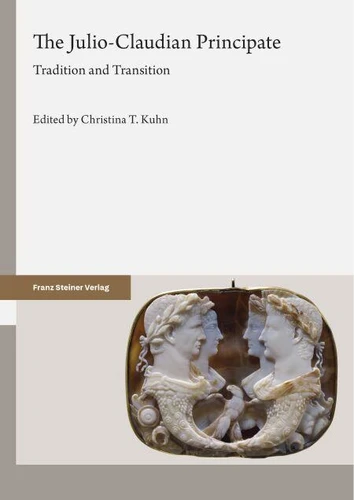
The Julio-Claudian Principate. Tradition and Transition
Par :Formats :
Disponible dans votre compte client Decitre ou Furet du Nord dès validation de votre commande. Le format PDF est :
- Compatible avec une lecture sur My Vivlio (smartphone, tablette, ordinateur)
- Compatible avec une lecture sur liseuses Vivlio
- Pour les liseuses autres que Vivlio, vous devez utiliser le logiciel Adobe Digital Edition. Non compatible avec la lecture sur les liseuses Kindle, Remarkable et Sony
 , qui est-ce ?
Notre partenaire de plateforme de lecture numérique où vous retrouverez l'ensemble de vos ebooks gratuitement
Pour en savoir plus sur nos ebooks, consultez notre aide en ligne ici
C'est si simple ! Lisez votre ebook avec l'app Vivlio sur votre tablette, mobile ou ordinateur :

- Nombre de pages236
- FormatPDF
- ISBN978-3-515-13752-2
- EAN9783515137522
- Date de parution07/01/2025
- Protection num.Digital Watermarking
- Taille3 Mo
- Infos supplémentairespdf
- ÉditeurFranz Steiner
Résumé
The period of the Julio-Claudian principate, with Rome's transition from Republic to Empire and the rise of an imperial dynasty, marks a fascinating episode of historical change in Roman history. It saw the establishment and consolidation of a new political system that fundamentally altered Rome's political landscape, its socio-economic structures, cultural identity, and its relations with the wider Mediterranean world.
This volume brings together ten essays offering fresh perspectives on key aspects of this transformative era.
Representing a wide range of disciplines, the authors shed light on the nature, fluidity, and plasticity of the early principate and the new realities it shaped. They discuss traditional terminology and periodization, the distinctive discourses and policies of the Julio-Claudian emperors, and the role of individuals and institutions in shaping the processes of transformation. They also analyze the development of traditional offices and the emergence of new structural features, as well as the ways in which contemporaries and later historians perceived this period of change and crafted the narratives of one-man rule.
Representing a wide range of disciplines, the authors shed light on the nature, fluidity, and plasticity of the early principate and the new realities it shaped. They discuss traditional terminology and periodization, the distinctive discourses and policies of the Julio-Claudian emperors, and the role of individuals and institutions in shaping the processes of transformation. They also analyze the development of traditional offices and the emergence of new structural features, as well as the ways in which contemporaries and later historians perceived this period of change and crafted the narratives of one-man rule.