
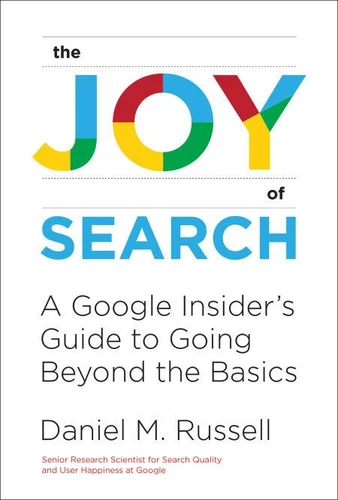
The Joy of Search. A Google Insider's Guide to Going Beyond the Basics
Par :Formats :
Disponible dans votre compte client Decitre ou Furet du Nord dès validation de votre commande. Le format ePub protégé est :
- Compatible avec une lecture sur My Vivlio (smartphone, tablette, ordinateur)
- Compatible avec une lecture sur liseuses Vivlio
- Pour les liseuses autres que Vivlio, vous devez utiliser le logiciel Adobe Digital Edition. Non compatible avec la lecture sur les liseuses Kindle, Remarkable et Sony
- Non compatible avec un achat hors France métropolitaine
 , qui est-ce ?
Notre partenaire de plateforme de lecture numérique où vous retrouverez l'ensemble de vos ebooks gratuitement
Pour en savoir plus sur nos ebooks, consultez notre aide en ligne ici
C'est si simple ! Lisez votre ebook avec l'app Vivlio sur votre tablette, mobile ou ordinateur :

- Nombre de pages336
- FormatePub
- ISBN978-0-262-35471-4
- EAN9780262354714
- Date de parution01/10/2019
- Protection num.Adobe DRM
- Taille11 Mo
- Infos supplémentairesepub
- ÉditeurThe MIT Press
Résumé
A Google researcher shares tips, tricks, and interesting stories on maximizing the power of search engines like Google and Wikipedia. You don't have to be a computer whiz to master the art of online search! We all know how to look up something online by typing words into a search engine. We do this so often that we have made the most famous search engine a verb: we Google it-"Japan population" or "Nobel Peace Prize" or "poison ivy" or whatever we want to know.
But knowing how to Google something doesn't make us search experts; there's much more we can do to access the massive collective knowledge available online. In The Joy of Search, Daniel Russell shows us how to be great online researchers. We don't have to be computer geeks or a scholar searching out obscure facts; we just need to know some basic methods. Russell demonstrates these methods with step-by-step searches for answers to a series of intriguing questions-from "what is the wrong side of a towel?" to "what is the most likely way you will die?" Along the way, readers will discover essential tools for effective online searches-and learn some fascinating facts and interesting stories.
Russell explains how to frame search queries so they will yield information and describes the best ways to use such resources as Google Earth, Google Scholar, Wikipedia, and Wikimedia. He shows when to put search terms in double quotes, how to use the operator (*), why metadata is important, and how to triangulate information from multiple sources. By the end of this engaging journey of discovering, readers will have the definitive answer to why the best online searches involve more than typing a few words into Google.
But knowing how to Google something doesn't make us search experts; there's much more we can do to access the massive collective knowledge available online. In The Joy of Search, Daniel Russell shows us how to be great online researchers. We don't have to be computer geeks or a scholar searching out obscure facts; we just need to know some basic methods. Russell demonstrates these methods with step-by-step searches for answers to a series of intriguing questions-from "what is the wrong side of a towel?" to "what is the most likely way you will die?" Along the way, readers will discover essential tools for effective online searches-and learn some fascinating facts and interesting stories.
Russell explains how to frame search queries so they will yield information and describes the best ways to use such resources as Google Earth, Google Scholar, Wikipedia, and Wikimedia. He shows when to put search terms in double quotes, how to use the operator (*), why metadata is important, and how to triangulate information from multiple sources. By the end of this engaging journey of discovering, readers will have the definitive answer to why the best online searches involve more than typing a few words into Google.