SOLDES
Jusqu'à -70% sur une sélection d'articles*

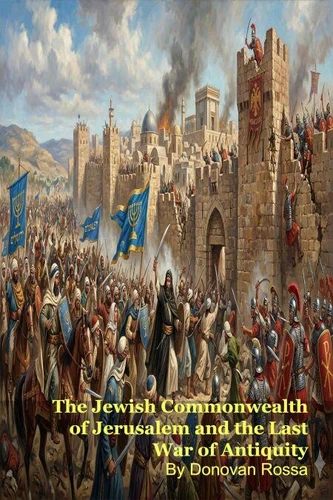
The Jewish Commonwealth of Jerusalem and the Last War of Antiquity
Par :Formats :
Disponible dans votre compte client Decitre ou Furet du Nord dès validation de votre commande. Le format ePub est :
- Compatible avec une lecture sur My Vivlio (smartphone, tablette, ordinateur)
- Compatible avec une lecture sur liseuses Vivlio
- Pour les liseuses autres que Vivlio, vous devez utiliser le logiciel Adobe Digital Edition. Non compatible avec la lecture sur les liseuses Kindle, Remarkable et Sony
 , qui est-ce ?
Notre partenaire de plateforme de lecture numérique où vous retrouverez l'ensemble de vos ebooks gratuitement
Pour en savoir plus sur nos ebooks, consultez notre aide en ligne ici
C'est si simple ! Lisez votre ebook avec l'app Vivlio sur votre tablette, mobile ou ordinateur :

- FormatePub
- ISBN8233041198
- EAN9798233041198
- Date de parution28/03/2026
- Protection num.pas de protection
- Infos supplémentairesepub
- ÉditeurLinda Balsamo
Résumé
The Jewish Commonwealth of Jerusalem and the Last War of AntiquityIn the summer of 614 CE, something happened that the Jewish world had been praying toward for five centuries: the gates of Jerusalem opened to a Jewish army, and for three extraordinary years a Jewish commonwealth governed the holiest city on earth, renewed sacrificial worship on the Temple Mount, and began preparations for the rebuilding of the Third Temple.
It ended in execution, exile, and massacre, but while it lasted, it was the most ambitious act of Jewish political self-determination between the fall of the Second Temple and the modern era. The Jewish Commonwealth of Jerusalem reconstructs this forgotten episode in full, tracing the revolt of 614 from its roots in two and a half centuries of Byzantine legal discrimination against the Jewish population of Palestine, through the Persian-Jewish military alliance that made the Commonwealth possible, to the messianic excitement that swept the diaspora when news of the conquest reached Babylonia and Egypt.
Drawing on the chronicle sources, the apocalyptic literature of the Sefer Zerubbabel, and the latest archaeological and numismatic evidence, this book tells the story of Benjamin of Tiberias, the financier who made the revolt possible; Nehemiah ben Hushiel, the prince from Babylonia who governed Jerusalem as the tradition's predicted Messiah ben Joseph; and the Persian general Shahrbaraz, whose military genius carried the campaign from Antioch to the walls of the holy city.
At its heart, this is a story about what happens when a community that has been systematically excluded from political life for generations finally finds, in the crack between two collapsing empires, the opportunity to act. The Commonwealth lasted three years. The fire on the altar burned, the prayers were offered in Jerusalem rather than toward it, and the gap between the liturgical aspiration and the historical reality was briefly, impossibly, humanly small.
Then it ended, in Persian betrayal, broken imperial oaths, and the massacre that Heraclius authorised against the communities his personal honour had sworn to protect. This is the story of that light: what it took to light it, how briefly it burned, and why its recovery matters.
It ended in execution, exile, and massacre, but while it lasted, it was the most ambitious act of Jewish political self-determination between the fall of the Second Temple and the modern era. The Jewish Commonwealth of Jerusalem reconstructs this forgotten episode in full, tracing the revolt of 614 from its roots in two and a half centuries of Byzantine legal discrimination against the Jewish population of Palestine, through the Persian-Jewish military alliance that made the Commonwealth possible, to the messianic excitement that swept the diaspora when news of the conquest reached Babylonia and Egypt.
Drawing on the chronicle sources, the apocalyptic literature of the Sefer Zerubbabel, and the latest archaeological and numismatic evidence, this book tells the story of Benjamin of Tiberias, the financier who made the revolt possible; Nehemiah ben Hushiel, the prince from Babylonia who governed Jerusalem as the tradition's predicted Messiah ben Joseph; and the Persian general Shahrbaraz, whose military genius carried the campaign from Antioch to the walls of the holy city.
At its heart, this is a story about what happens when a community that has been systematically excluded from political life for generations finally finds, in the crack between two collapsing empires, the opportunity to act. The Commonwealth lasted three years. The fire on the altar burned, the prayers were offered in Jerusalem rather than toward it, and the gap between the liturgical aspiration and the historical reality was briefly, impossibly, humanly small.
Then it ended, in Persian betrayal, broken imperial oaths, and the massacre that Heraclius authorised against the communities his personal honour had sworn to protect. This is the story of that light: what it took to light it, how briefly it burned, and why its recovery matters.