SOLDES
Jusqu'à -70% sur une sélection d'articles*

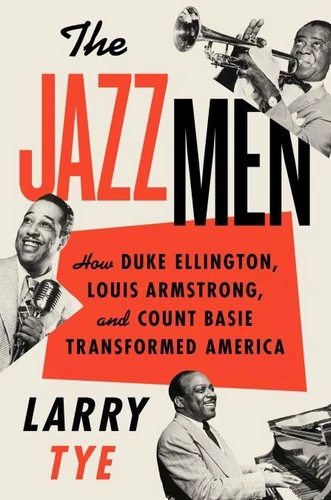
The Jazzmen. How Duke Ellington, Louis Armstrong, and Count Basie Transformed America
Par :Formats :
Disponible dans votre compte client Decitre ou Furet du Nord dès validation de votre commande. Le format ePub protégé est :
- Compatible avec une lecture sur My Vivlio (smartphone, tablette, ordinateur)
- Compatible avec une lecture sur liseuses Vivlio
- Pour les liseuses autres que Vivlio, vous devez utiliser le logiciel Adobe Digital Edition. Non compatible avec la lecture sur les liseuses Kindle, Remarkable et Sony
- Non compatible avec un achat hors France métropolitaine
 , qui est-ce ?
Notre partenaire de plateforme de lecture numérique où vous retrouverez l'ensemble de vos ebooks gratuitement
Pour en savoir plus sur nos ebooks, consultez notre aide en ligne ici
C'est si simple ! Lisez votre ebook avec l'app Vivlio sur votre tablette, mobile ou ordinateur :

- Nombre de pages416
- FormatePub
- ISBN978-0-358-38042-9
- EAN9780358380429
- Date de parution07/05/2024
- Protection num.Adobe DRM
- Infos supplémentairesepub
- ÉditeurMariner Books
Résumé
From the New York Times bestselling author of Satchel and Bobby Kennedy, a sweeping and spellbinding portrait of the longtime kings of jazz-Duke Ellington, Louis Armstrong, and Count Basie-who, born within a few years of one another, overcame racist exclusion and violence to become the most popular entertainers on the planet. This is the story of three revolutionary American musicians, the maestro jazzmen who orchestrated the chords that throb at the soul of twentieth-century America.
Duke Ellington, the grandson of slaves who was christened Edward Kennedy Ellington, was a man whose story is as layered and nuanced as his name suggests and whose music transcended category. Louis Daniel Armstrong was born in a New Orleans slum so tough it was called The Battlefield and, at age seven, got his first musical instrument, a ten-cent tin horn that drew buyers to his rag-peddling wagon and set him on the road to elevating jazz into a pulsating force for spontaneity and freedom.
William James Basie, too, grew up in a world unfamiliar to white fans-the son of a coachman and laundress who dreamed of escaping every time the traveling carnival swept into town, and who finally engineered his getaway with help from Fats Waller. What is far less known about these groundbreakers is that they were bound not just by their music or even the discrimination that they, like nearly all Black performers of their day, routinely encountered.
Each defied and ultimately overcame racial boundaries by opening America's eyes and souls to the magnificence of their music. In the process they wrote the soundtrack for the civil rights movement. Based on more than 250 interviews, this exhaustively researched book brings alive the history of Black America in the early-to-mid 1900s through the singular lens of the country's most gifted, engaging, and enduring African-American musicians.
Duke Ellington, the grandson of slaves who was christened Edward Kennedy Ellington, was a man whose story is as layered and nuanced as his name suggests and whose music transcended category. Louis Daniel Armstrong was born in a New Orleans slum so tough it was called The Battlefield and, at age seven, got his first musical instrument, a ten-cent tin horn that drew buyers to his rag-peddling wagon and set him on the road to elevating jazz into a pulsating force for spontaneity and freedom.
William James Basie, too, grew up in a world unfamiliar to white fans-the son of a coachman and laundress who dreamed of escaping every time the traveling carnival swept into town, and who finally engineered his getaway with help from Fats Waller. What is far less known about these groundbreakers is that they were bound not just by their music or even the discrimination that they, like nearly all Black performers of their day, routinely encountered.
Each defied and ultimately overcame racial boundaries by opening America's eyes and souls to the magnificence of their music. In the process they wrote the soundtrack for the civil rights movement. Based on more than 250 interviews, this exhaustively researched book brings alive the history of Black America in the early-to-mid 1900s through the singular lens of the country's most gifted, engaging, and enduring African-American musicians.
A propos de Larry Tye
11,46 €
Shock
E-book
10,31 €