SOLDES
Jusqu'à -70% sur une sélection d'articles*

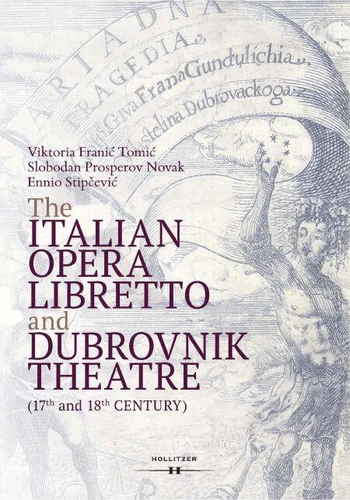
The Italian Opera Libretto and Dubrovnik Theatre. (17th and 18th Century)
Par : , ,Formats :
Disponible dans votre compte client Decitre ou Furet du Nord dès validation de votre commande. Le format PDF est :
- Compatible avec une lecture sur My Vivlio (smartphone, tablette, ordinateur)
- Compatible avec une lecture sur liseuses Vivlio
- Pour les liseuses autres que Vivlio, vous devez utiliser le logiciel Adobe Digital Edition. Non compatible avec la lecture sur les liseuses Kindle, Remarkable et Sony
 , qui est-ce ?
Notre partenaire de plateforme de lecture numérique où vous retrouverez l'ensemble de vos ebooks gratuitement
Pour en savoir plus sur nos ebooks, consultez notre aide en ligne ici
C'est si simple ! Lisez votre ebook avec l'app Vivlio sur votre tablette, mobile ou ordinateur :

- Nombre de pages136
- FormatPDF
- ISBN978-3-99012-799-5
- EAN9783990127995
- Date de parution20/04/2020
- Protection num.Digital Watermarking
- Taille8 Mo
- Infos supplémentairespdf
- ÉditeurHollitzer Wissenschaftsverlag
Résumé
Nowhere in Europe the Italian opera libretto has had such a direct and decisive influence on original national drama production as it did in Dubrovnik during the 17th and 18th century. In the "Golden Age of Croatian Literature", a hybrid drama genre was created.
For more than a century, authors of this genre looked attentively at the most important trends of Italian opera production and followed them faithfully.
In Croatian literature of that period, a specific model of libretti without music was created, one that appropriated the Italian libretto. These plays were not performed along with functional music, although sometimes authors and actors would provide instrumental accompaniment to the texts. Nothing more needs to be said about the dissemination and specific reception of Italian opera libretti in Dubrovnik during the 17th and 18th century to be understood as occupying a noteworthy place in the cultural life of Europe.
In Croatian literature of that period, a specific model of libretti without music was created, one that appropriated the Italian libretto. These plays were not performed along with functional music, although sometimes authors and actors would provide instrumental accompaniment to the texts. Nothing more needs to be said about the dissemination and specific reception of Italian opera libretti in Dubrovnik during the 17th and 18th century to be understood as occupying a noteworthy place in the cultural life of Europe.