SOLDES
Jusqu'à -70% sur une sélection d'articles*

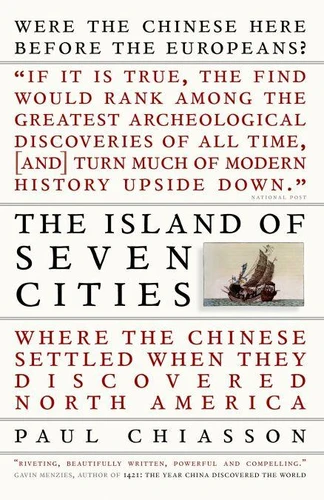
The Island of Seven Cities. Where the Chinese Settled When They Discovered North America
Par :Formats :
Disponible dans votre compte client Decitre ou Furet du Nord dès validation de votre commande. Le format ePub protégé est :
- Compatible avec une lecture sur My Vivlio (smartphone, tablette, ordinateur)
- Compatible avec une lecture sur liseuses Vivlio
- Pour les liseuses autres que Vivlio, vous devez utiliser le logiciel Adobe Digital Edition. Non compatible avec la lecture sur les liseuses Kindle, Remarkable et Sony
- Non compatible avec un achat hors France métropolitaine
 , qui est-ce ?
Notre partenaire de plateforme de lecture numérique où vous retrouverez l'ensemble de vos ebooks gratuitement
Pour en savoir plus sur nos ebooks, consultez notre aide en ligne ici
C'est si simple ! Lisez votre ebook avec l'app Vivlio sur votre tablette, mobile ou ordinateur :

- Nombre de pages384
- FormatePub
- ISBN978-0-307-36703-7
- EAN9780307367037
- Date de parution20/08/2010
- Protection num.Adobe DRM
- Taille7 Mo
- Infos supplémentairesepub
- ÉditeurVintage Canada
Résumé
The gripping, marvel-filled account of how a native son took a casual walk up a mountain on Cape Breton Island and made an archeological discovery of world-shaking proportions. In the summer of 2002, at home for his parents' fiftieth wedding anniversary, Paul Chiasson decided to climb a mountain he had never explored on the island where eight generations of his Acadian family had lived. Cape Breton is one of the oldest points of exploration and settlement in the Americas, with a history dating back to the first days of European discovery, and it is littered with the remnants of old settlements.
But the road that Chiasson found that day was unique. Well-made and consistently wide, and at one time clearly bordered with stone walls, the road had been a major undertaking. In the two years of detective work that followed, Chiasson systematically surveyed the history of Europeans in North America, and came to a stunning conclusion: the ruins he stumbled upon did not belong to the Portuguese, the French or the English - in fact, they pre-dated John Cabot's "discovery" of the island in 1497.
Using aerial and site photographs, maps and drawings, and his own expertise as an architect, Chiasson carries the reader along as he pieces together the clues to one of the world's great mysteries. While tantalizing mentions can be found in early navigators' journals and maps, The Island of Seven Cities reveals for the first time the existence of a large Chinese colony that thrived on Canadian shores well before the European Age of Discovery.
Chiasson addresses how the colony was abandoned and forgotten, in the New World and in China, except in the storytelling and culture of the Mi'kmaq, whose written language, clothing, technical knowledge, religious beliefs and legends, he argues, expose deep cultural roots in China. The Island of Seven Cities unveils the first tangible proof that the Chinese were in the New World before Columbus. Evidence that Cape Breton is the site of a Chinese settlement:-Stone roads with dimensions and building properties that match Chinese roads -A ruined city and surrounding farmlands designed in the manner of the Chinese-Language and clothing of the indigenous Mi'kmaq match Chinese dress -Mi'kmaq legends tell of a wise man from across the seas who imparted Confucian advice-In 1490, before he left for the Americas, Christopher Columbus mapped an island that looked like Cape Breton based on the travels of others
But the road that Chiasson found that day was unique. Well-made and consistently wide, and at one time clearly bordered with stone walls, the road had been a major undertaking. In the two years of detective work that followed, Chiasson systematically surveyed the history of Europeans in North America, and came to a stunning conclusion: the ruins he stumbled upon did not belong to the Portuguese, the French or the English - in fact, they pre-dated John Cabot's "discovery" of the island in 1497.
Using aerial and site photographs, maps and drawings, and his own expertise as an architect, Chiasson carries the reader along as he pieces together the clues to one of the world's great mysteries. While tantalizing mentions can be found in early navigators' journals and maps, The Island of Seven Cities reveals for the first time the existence of a large Chinese colony that thrived on Canadian shores well before the European Age of Discovery.
Chiasson addresses how the colony was abandoned and forgotten, in the New World and in China, except in the storytelling and culture of the Mi'kmaq, whose written language, clothing, technical knowledge, religious beliefs and legends, he argues, expose deep cultural roots in China. The Island of Seven Cities unveils the first tangible proof that the Chinese were in the New World before Columbus. Evidence that Cape Breton is the site of a Chinese settlement:-Stone roads with dimensions and building properties that match Chinese roads -A ruined city and surrounding farmlands designed in the manner of the Chinese-Language and clothing of the indigenous Mi'kmaq match Chinese dress -Mi'kmaq legends tell of a wise man from across the seas who imparted Confucian advice-In 1490, before he left for the Americas, Christopher Columbus mapped an island that looked like Cape Breton based on the travels of others