SOLDES
Jusqu'à -70% sur une sélection d'articles*

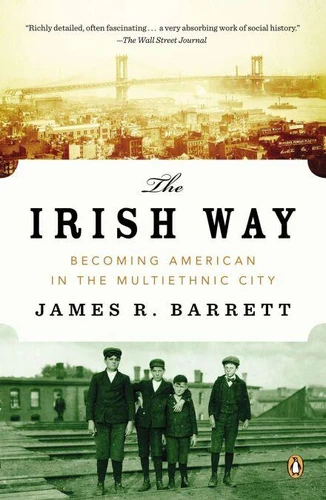
The Irish Way. Becoming American in the Multiethnic City
Par :Formats :
Disponible dans votre compte client Decitre ou Furet du Nord dès validation de votre commande. Le format ePub protégé est :
- Compatible avec une lecture sur My Vivlio (smartphone, tablette, ordinateur)
- Compatible avec une lecture sur liseuses Vivlio
- Pour les liseuses autres que Vivlio, vous devez utiliser le logiciel Adobe Digital Edition. Non compatible avec la lecture sur les liseuses Kindle, Remarkable et Sony
- Non compatible avec un achat hors France métropolitaine
 , qui est-ce ?
Notre partenaire de plateforme de lecture numérique où vous retrouverez l'ensemble de vos ebooks gratuitement
Pour en savoir plus sur nos ebooks, consultez notre aide en ligne ici
C'est si simple ! Lisez votre ebook avec l'app Vivlio sur votre tablette, mobile ou ordinateur :

- Nombre de pages400
- FormatePub
- ISBN978-1-101-56059-4
- EAN9781101560594
- Date de parution01/03/2012
- Protection num.Adobe DRM
- Taille5 Mo
- Infos supplémentairesepub
- ÉditeurPenguin Books
Résumé
A lively, street-level history of turn-of-the-century urban life explores the Americanizing influence of the Irish on successive waves of migrants to the American city. In the newest volume in the award-winning Penguin History of American Life series, James R. Barrett chronicles how a new urban American identity was forged in the streets, saloons, churches, and workplaces of the American city. This process of "Americanization from the bottom up" was deeply shaped by the Irish.
From Lower Manhattan to the South Side of Chicago to Boston's North End, newer waves of immigrants and African Americans found it nearly impossible to avoid the Irish. While historians have emphasized the role of settlement houses and other mainstream institutions in Americanizing immigrants, Barrett makes the original case that the culture absorbed by newcomers upon reaching American shores had a distinctly Hibernian cast.
By 1900, there were more people of Irish descent in New York City than in Dublin; more in the United States than in all of Ireland. But in the late nineteenth century, the sources of immigration began to shift, to southern and eastern Europe and beyond. Whether these newcomers wanted to save their souls, get a drink, find a job, or just take a stroll in the neighborhood, they had to deal with entrenched Irish Americans.
Barrett reveals how the Irish vacillated between a progressive and idealistic impulse toward their fellow immigrants and a parochial defensiveness stemming from the hostility earlier generations had faced upon their own arrival in America. They imparted racist attitudes toward African Americans; they established ethnic "deadlines" across city neighborhoods; they drove other immigrants from docks, factories, and labor unions.
Yet the social teachings of the Catholic Church, a sense of solidarity with the oppressed, and dark memories of poverty and violence in both Ireland and America ushered in a wave of progressive political activism that eventually embraced other immigrants. Drawing on contemporary sociological studies and diaries, newspaper accounts, and Irish American literature, The Irish Way illustrates how the interactions between the Irish and later immigrants on the streets, on the vaudeville stage, in Catholic churches, and in workplaces helped forge a multiethnic American identity that has a profound legacy in our cities today.
From Lower Manhattan to the South Side of Chicago to Boston's North End, newer waves of immigrants and African Americans found it nearly impossible to avoid the Irish. While historians have emphasized the role of settlement houses and other mainstream institutions in Americanizing immigrants, Barrett makes the original case that the culture absorbed by newcomers upon reaching American shores had a distinctly Hibernian cast.
By 1900, there were more people of Irish descent in New York City than in Dublin; more in the United States than in all of Ireland. But in the late nineteenth century, the sources of immigration began to shift, to southern and eastern Europe and beyond. Whether these newcomers wanted to save their souls, get a drink, find a job, or just take a stroll in the neighborhood, they had to deal with entrenched Irish Americans.
Barrett reveals how the Irish vacillated between a progressive and idealistic impulse toward their fellow immigrants and a parochial defensiveness stemming from the hostility earlier generations had faced upon their own arrival in America. They imparted racist attitudes toward African Americans; they established ethnic "deadlines" across city neighborhoods; they drove other immigrants from docks, factories, and labor unions.
Yet the social teachings of the Catholic Church, a sense of solidarity with the oppressed, and dark memories of poverty and violence in both Ireland and America ushered in a wave of progressive political activism that eventually embraced other immigrants. Drawing on contemporary sociological studies and diaries, newspaper accounts, and Irish American literature, The Irish Way illustrates how the interactions between the Irish and later immigrants on the streets, on the vaudeville stage, in Catholic churches, and in workplaces helped forge a multiethnic American identity that has a profound legacy in our cities today.