SOLDES
Jusqu'à -70% sur une sélection d'articles*

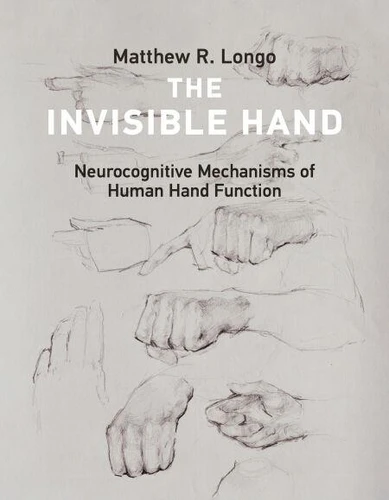
The Invisible Hand. Neurocognitive Mechanisms of Human Hand Function
Par :Formats :
Disponible dans votre compte client Decitre ou Furet du Nord dès validation de votre commande. Le format ePub protégé est :
- Compatible avec une lecture sur My Vivlio (smartphone, tablette, ordinateur)
- Compatible avec une lecture sur liseuses Vivlio
- Pour les liseuses autres que Vivlio, vous devez utiliser le logiciel Adobe Digital Edition. Non compatible avec la lecture sur les liseuses Kindle, Remarkable et Sony
- Non compatible avec un achat hors France métropolitaine
 , qui est-ce ?
Notre partenaire de plateforme de lecture numérique où vous retrouverez l'ensemble de vos ebooks gratuitement
Pour en savoir plus sur nos ebooks, consultez notre aide en ligne ici
C'est si simple ! Lisez votre ebook avec l'app Vivlio sur votre tablette, mobile ou ordinateur :

- Nombre de pages518
- FormatePub
- ISBN978-0-262-38259-5
- EAN9780262382595
- Date de parution15/04/2025
- Protection num.Adobe DRM
- Taille39 Mo
- Infos supplémentairesepub
- ÉditeurThe MIT Press
Résumé
How the "invisible hand" of the nervous system makes the human hand such an evolutionary success. The hand has a central role in both human evolution and cultural development-in our descent and in our ascent. It is, Immanuel Kant said, "the visible part of the brain." It is the invisible that concerns Matthew Longo in The Invisible Hand, a wide-ranging, deftly written account of the neural and cognitive mechanisms that have made a seemingly ordinary physical appendage an extraordinary tool in the evolution of humanity.
The hand has been the focus of an enormous amount of research from a dizzying range of disciplines, from anatomy, psychology, and neuroscience to evolutionary biology and archaeology. With the concept of the invisible hand, Longo integrates and contextualizes the findings from these disparate fields to show how the neurocognitive mechanisms that comprise the invisible hand are central to understanding a wide array of phenomena, including basic sensory and motor function, space perception, gesture, and even the self.
More generally, he contends that the extraordinary abilities of the hand arise precisely from the complementary nature and tight integration of the visible and invisible hands-a proposition that leads deep into topics as diverse as haptics, tool use, handedness, phantom limbs, and evolution. His work elucidates and significantly expands a key chapter of the story of human evolution and culture as manifested in the human hand.
The hand has been the focus of an enormous amount of research from a dizzying range of disciplines, from anatomy, psychology, and neuroscience to evolutionary biology and archaeology. With the concept of the invisible hand, Longo integrates and contextualizes the findings from these disparate fields to show how the neurocognitive mechanisms that comprise the invisible hand are central to understanding a wide array of phenomena, including basic sensory and motor function, space perception, gesture, and even the self.
More generally, he contends that the extraordinary abilities of the hand arise precisely from the complementary nature and tight integration of the visible and invisible hands-a proposition that leads deep into topics as diverse as haptics, tool use, handedness, phantom limbs, and evolution. His work elucidates and significantly expands a key chapter of the story of human evolution and culture as manifested in the human hand.