SOLDES
Jusqu'à -70% sur une sélection d'articles*

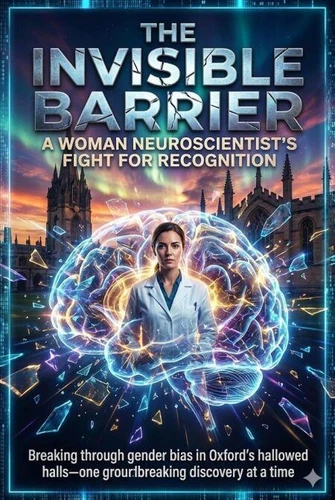
The Invisible Barrier: A Woman Neuroscientist's Fight for Recognition. Breaking through gender bias in Oxford's hallowed halls—one groundbreaking discovery at a time
Par :Formats :
Disponible dans votre compte client Decitre ou Furet du Nord dès validation de votre commande. Le format ePub est :
- Compatible avec une lecture sur My Vivlio (smartphone, tablette, ordinateur)
- Compatible avec une lecture sur liseuses Vivlio
- Pour les liseuses autres que Vivlio, vous devez utiliser le logiciel Adobe Digital Edition. Non compatible avec la lecture sur les liseuses Kindle, Remarkable et Sony
 , qui est-ce ?
Notre partenaire de plateforme de lecture numérique où vous retrouverez l'ensemble de vos ebooks gratuitement
Pour en savoir plus sur nos ebooks, consultez notre aide en ligne ici
C'est si simple ! Lisez votre ebook avec l'app Vivlio sur votre tablette, mobile ou ordinateur :

- Nombre de pages217
- FormatePub
- ISBN978-3-565-13466-3
- EAN9783565134663
- Date de parution18/12/2025
- Protection num.pas de protection
- Taille368 Ko
- Infos supplémentairesepub
- ÉditeurEmphaloz Publishing House
Résumé
She decoded neural pathways that others missed. Her research on synaptic plasticity should have catapulted her to prominence. Instead, she watched male colleagues with comparable-or lesser-findings accelerate past her while she fought for lab funding, teaching load equity, and basic professional respect.
This is the memoir of a female neuroscientist who navigated the corridors of Cambridge and Oxford-institutions renowned for genius yet deeply resistant to recognizing it in women.
Through meticulous scientific work and determined resilience, she made breakthrough discoveries that advanced understanding of neurological disease. Yet she battled systematically: the department head who suggested her research was "less rigorous" than male counterparts', the grant committees that funded less innovative work from men, the assumption that she'd prioritize family over career, the casual misogyny disguised as academic tradition. Beyond laboratory doors lies an intimate portrait of survival within elite academia: the emotional labor of constantly proving worth, the strategic silence required to avoid being labeled "difficult, " the mentors who helped and the gatekeepers who didn't, and the crushing loneliness of being the only woman in senior leadership.
But it's also a testament to scientific integrity-refusing to compromise methodology, nurturing the next generation of female scientists, and finding allies within a system designed to exclude. This narrative exposes how gender discrimination operates at the highest intellectual echelons-not through overt barriers but through systemic skepticism, unequal evaluation standards, and the persistent myth that excellence speaks for itself.
For female scientists navigating male-dominated fields, academics questioning institutional bias, students seeking role models in STEM, and anyone invested in research integrity and equity, this memoir offers both cautionary tale and inspirational blueprint for change.
Through meticulous scientific work and determined resilience, she made breakthrough discoveries that advanced understanding of neurological disease. Yet she battled systematically: the department head who suggested her research was "less rigorous" than male counterparts', the grant committees that funded less innovative work from men, the assumption that she'd prioritize family over career, the casual misogyny disguised as academic tradition. Beyond laboratory doors lies an intimate portrait of survival within elite academia: the emotional labor of constantly proving worth, the strategic silence required to avoid being labeled "difficult, " the mentors who helped and the gatekeepers who didn't, and the crushing loneliness of being the only woman in senior leadership.
But it's also a testament to scientific integrity-refusing to compromise methodology, nurturing the next generation of female scientists, and finding allies within a system designed to exclude. This narrative exposes how gender discrimination operates at the highest intellectual echelons-not through overt barriers but through systemic skepticism, unequal evaluation standards, and the persistent myth that excellence speaks for itself.
For female scientists navigating male-dominated fields, academics questioning institutional bias, students seeking role models in STEM, and anyone invested in research integrity and equity, this memoir offers both cautionary tale and inspirational blueprint for change.