SOLDES
Jusqu'à -70% sur une sélection d'articles*

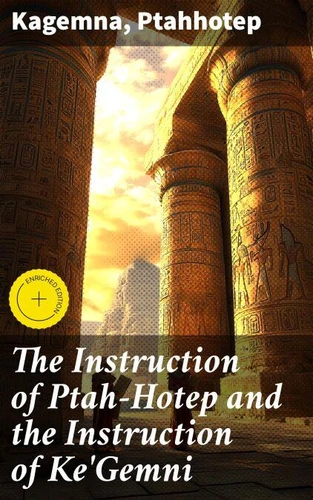
The Instruction of Ptah-Hotep and the Instruction of Ke'Gemni. The Oldest Books in the World
Par : , ,Formats :
Disponible dans votre compte client Decitre ou Furet du Nord dès validation de votre commande. Le format ePub est :
- Compatible avec une lecture sur My Vivlio (smartphone, tablette, ordinateur)
- Compatible avec une lecture sur liseuses Vivlio
- Pour les liseuses autres que Vivlio, vous devez utiliser le logiciel Adobe Digital Edition. Non compatible avec la lecture sur les liseuses Kindle, Remarkable et Sony
 , qui est-ce ?
Notre partenaire de plateforme de lecture numérique où vous retrouverez l'ensemble de vos ebooks gratuitement
Pour en savoir plus sur nos ebooks, consultez notre aide en ligne ici
C'est si simple ! Lisez votre ebook avec l'app Vivlio sur votre tablette, mobile ou ordinateur :

- Nombre de pages191
- FormatePub
- ISBN4057664124647
- EAN4057664124647
- Date de parution19/11/2019
- Protection num.Digital Watermarking
- Taille1 Mo
- Infos supplémentairesepub
- ÉditeurGOOD PRESS
Résumé
The anthology 'The Instruction of Ptah-Hotep and the Instruction of Ke'Gemni' masterfully curates ancient wisdom from the Old Kingdom of Egypt, encapsulating timeless themes of ethical teachings and introspective guidance. Within the expansive terrain of didactic prose, the collection traverses the importance of personal conduct, the essence of wisdom in leadership, and the virtues of temperance and integrity.
With its stylistic range from eloquent aphorisms to profound narratives, the works elevate moral instruction to an art form, showcasing the enduring relevance of these early literary endeavors. Ptahhotep and Ke'Gemni, wise viziers under the Pharaohs, weave their experiences and philosophies into the fabric of these instructions, serving as conduits of the socio-political and cultural doctrines of their era.
Their collective contributions encapsulate the core values of the Old Kingdom, resonating with the era'Äôs ideological movements that emphasized ethical stewardship and literacy's role in governance. The voices of these visionaries converge to offer rich guidance, embodying a tapestry of wisdom that bridges millennia. 'Instructions' provides readers with an invaluable opportunity to immerse themselves in ancient Egyptian culture through a myriad of perspectives and styles.
The collection not only educates but also prompts introspection, inviting readers to engage in a dialogue with the distant yet familiar thoughts of the past. It's a scholarly treasure trove that promises to enrich understanding and inspire a profound appreciation for the didactic brilliance of antiquity.
With its stylistic range from eloquent aphorisms to profound narratives, the works elevate moral instruction to an art form, showcasing the enduring relevance of these early literary endeavors. Ptahhotep and Ke'Gemni, wise viziers under the Pharaohs, weave their experiences and philosophies into the fabric of these instructions, serving as conduits of the socio-political and cultural doctrines of their era.
Their collective contributions encapsulate the core values of the Old Kingdom, resonating with the era'Äôs ideological movements that emphasized ethical stewardship and literacy's role in governance. The voices of these visionaries converge to offer rich guidance, embodying a tapestry of wisdom that bridges millennia. 'Instructions' provides readers with an invaluable opportunity to immerse themselves in ancient Egyptian culture through a myriad of perspectives and styles.
The collection not only educates but also prompts introspection, inviting readers to engage in a dialogue with the distant yet familiar thoughts of the past. It's a scholarly treasure trove that promises to enrich understanding and inspire a profound appreciation for the didactic brilliance of antiquity.
