The Incomplete Species
Par :Formats :
Disponible dans votre compte client Decitre ou Furet du Nord dès validation de votre commande. Le format ePub est :
- Compatible avec une lecture sur My Vivlio (smartphone, tablette, ordinateur)
- Compatible avec une lecture sur liseuses Vivlio
- Pour les liseuses autres que Vivlio, vous devez utiliser le logiciel Adobe Digital Edition. Non compatible avec la lecture sur les liseuses Kindle, Remarkable et Sony
 , qui est-ce ?
Notre partenaire de plateforme de lecture numérique où vous retrouverez l'ensemble de vos ebooks gratuitement
Pour en savoir plus sur nos ebooks, consultez notre aide en ligne ici
C'est si simple ! Lisez votre ebook avec l'app Vivlio sur votre tablette, mobile ou ordinateur :

- FormatePub
- ISBN8233157769
- EAN9798233157769
- Date de parution15/02/2026
- Protection num.pas de protection
- Infos supplémentairesepub
- ÉditeurLinda Balsamo
Résumé
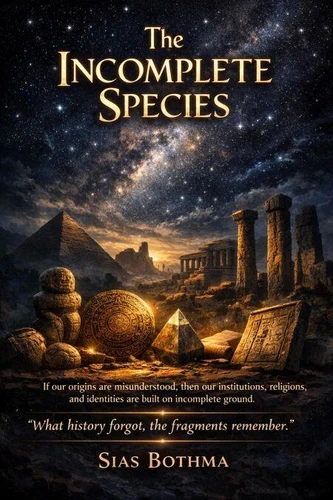
What if human history is not a straight line, but a series of resets?The Incomplete Species explores the idea that humanity's past has been shaped as much by catastrophe and loss as by progress. Across time, entire civilizations have risen, flourished, and vanished, leaving behind fragments, myths, ruins, and unanswered questions. Floods, climate shifts, volcanic eruptions, and cosmic events did not simply destroy cities.
They disrupted memory, erased knowledge, and forced humanity to begin again, often without understanding what was lost. This book examines how those events are remembered. Not as precise records, but as stories, symbols, rituals, and myths passed down through generations. Legends of sunken cities, divine punishment, giants, and forgotten ages may not be fantasy, but distorted memory. Human cognition preserves meaning and warning, even when dates, names, and mechanisms fade.
Drawing on archaeology, geology, mythology, anthropology, and cognitive science, The Incomplete Species looks at ancient civilizations across Africa, the Americas, Eurasia, Oceania, and the Mediterranean world. It asks why advanced knowledge appears suddenly in the archaeological record, why it disappears just as abruptly, and why similar myths emerge in cultures separated by oceans. This is not a book of final answers.
It is a book of questions. It challenges the assumption that modern humanity represents the peak of understanding, and instead suggests that we may be inheritors of an incomplete record, shaped by repeated collapse and recovery. If our origins are misunderstood, then our institutions, beliefs, and identities may be built on unstable ground. The Incomplete Species invites the reader to look again at what history forgot, and at what the fragments still remember.
They disrupted memory, erased knowledge, and forced humanity to begin again, often without understanding what was lost. This book examines how those events are remembered. Not as precise records, but as stories, symbols, rituals, and myths passed down through generations. Legends of sunken cities, divine punishment, giants, and forgotten ages may not be fantasy, but distorted memory. Human cognition preserves meaning and warning, even when dates, names, and mechanisms fade.
Drawing on archaeology, geology, mythology, anthropology, and cognitive science, The Incomplete Species looks at ancient civilizations across Africa, the Americas, Eurasia, Oceania, and the Mediterranean world. It asks why advanced knowledge appears suddenly in the archaeological record, why it disappears just as abruptly, and why similar myths emerge in cultures separated by oceans. This is not a book of final answers.
It is a book of questions. It challenges the assumption that modern humanity represents the peak of understanding, and instead suggests that we may be inheritors of an incomplete record, shaped by repeated collapse and recovery. If our origins are misunderstood, then our institutions, beliefs, and identities may be built on unstable ground. The Incomplete Species invites the reader to look again at what history forgot, and at what the fragments still remember.