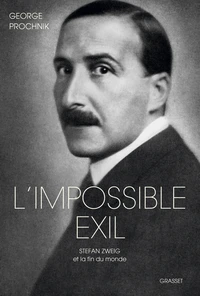
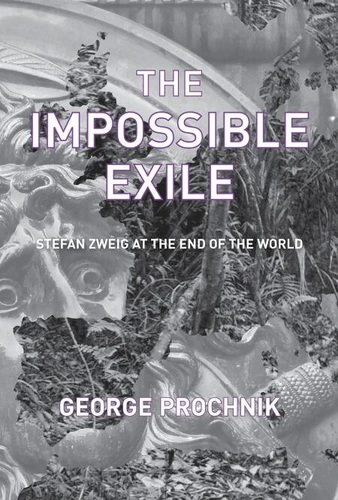
An original study of exile, told through the biography of Austrian writer Stefan Zweig By the 1930s, Stefan Zweig had become the most widely translated living author in the world. His novels, short stories, and biographies were so compelling that they became instant best sellers. Zweig was also an intellectual and a lover of all the arts, high and low. Yet after Hitler's rise to power, this celebrated writer who had dedicated so much energy to promoting international humanism plummeted, in a matter of a few years, into an increasingly isolated exile-from London to Bath to New York City, then Ossining, Rio, and finally Petrópolis-where, in 1942, in a cramped bungalow, he killed himself.
The Impossible Exile tells the tragic story of Zweig's extraordinary rise and fall while it also depicts, with great acumen, the gulf between the world of ideas in Europe and in America, and the consuming struggle of those forced to forsake one for the other. It also reveals how Zweig embodied, through his work, thoughts, and behavior, the end of an era-the implosion of Europe as an ideal of Western civilization.
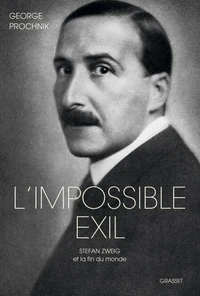
An original study of exile, told through the biography of Austrian writer Stefan Zweig By the 1930s, Stefan Zweig had become the most widely translated living author in the world. His novels, short stories, and biographies were so compelling that they became instant best sellers. Zweig was also an intellectual and a lover of all the arts, high and low. Yet after Hitler's rise to power, this celebrated writer who had dedicated so much energy to promoting international humanism plummeted, in a matter of a few years, into an increasingly isolated exile-from London to Bath to New York City, then Ossining, Rio, and finally Petrópolis-where, in 1942, in a cramped bungalow, he killed himself.
The Impossible Exile tells the tragic story of Zweig's extraordinary rise and fall while it also depicts, with great acumen, the gulf between the world of ideas in Europe and in America, and the consuming struggle of those forced to forsake one for the other. It also reveals how Zweig embodied, through his work, thoughts, and behavior, the end of an era-the implosion of Europe as an ideal of Western civilization.

 , qui est-ce ?