SOLDES
Jusqu'à -70% sur une sélection d'articles*

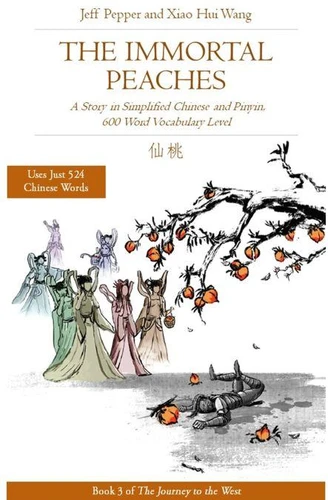
The Immortal Peaches: A Story in Simplified Chinese and Pinyin, 600 Word Vocabulary. Journey to the West, #3
Par : ,Formats :
Disponible dans votre compte client Decitre ou Furet du Nord dès validation de votre commande. Le format ePub est :
- Compatible avec une lecture sur My Vivlio (smartphone, tablette, ordinateur)
- Compatible avec une lecture sur liseuses Vivlio
- Pour les liseuses autres que Vivlio, vous devez utiliser le logiciel Adobe Digital Edition. Non compatible avec la lecture sur les liseuses Kindle, Remarkable et Sony
 , qui est-ce ?
Notre partenaire de plateforme de lecture numérique où vous retrouverez l'ensemble de vos ebooks gratuitement
Pour en savoir plus sur nos ebooks, consultez notre aide en ligne ici
C'est si simple ! Lisez votre ebook avec l'app Vivlio sur votre tablette, mobile ou ordinateur :

- FormatePub
- ISBN978-1-7320638-8-4
- EAN9781732063884
- Date de parution01/06/2019
- Protection num.pas de protection
- Infos supplémentairesepub
- ÉditeurImagin8 Press
Résumé
Once again the Monkey King's unlimited ambitions and uncontrolled appetites land him in deep trouble. He is given a job in heaven taking care of the Emperor's Garden of Immortal Peaches, but he can't stop himself from eating all the peaches. He impersonates a great Immortal and crashes a party in Heaven, stealing the guests' food and drink and barely escaping to his loyal troop of monkeys back on Earth.
And in the end, he battles an entire army of Immortals and men, and discovers that even calling himself the Great Sage Equal to Heaven does not make him equal to everyone in Heaven. This is the 3rd book in the best-selling The Journey to the West series of stories for students learning to read Chinese. It is based on the epic 16th century novel of the same name by Wu Chen'en. That novel was inspired by an actual journey by the Buddhist monk Tangseng (formerly called Xuanzang), who traveled from Chang'an westward to India in 629 A.
D. and returned seventeen years later with priceless knowledge and spiritual texts. Over the course of the book Tangseng and his companions face the 81 tribulations that Tangseng had to endure to attain Buddhahood. The first 3 books in the Journey to the West series have used a total of about 600 different Chinese words, but only 524 are used in this book. All new words are defined on the page where they are first used.
The book uses Simplified Chinese characters and includes pinyin, an English translation, and a full glossary. An audiobook is available on YouTube's Imagin8 Press channel, and a link to the audiobook can be found on the Imagin8 Press website.
And in the end, he battles an entire army of Immortals and men, and discovers that even calling himself the Great Sage Equal to Heaven does not make him equal to everyone in Heaven. This is the 3rd book in the best-selling The Journey to the West series of stories for students learning to read Chinese. It is based on the epic 16th century novel of the same name by Wu Chen'en. That novel was inspired by an actual journey by the Buddhist monk Tangseng (formerly called Xuanzang), who traveled from Chang'an westward to India in 629 A.
D. and returned seventeen years later with priceless knowledge and spiritual texts. Over the course of the book Tangseng and his companions face the 81 tribulations that Tangseng had to endure to attain Buddhahood. The first 3 books in the Journey to the West series have used a total of about 600 different Chinese words, but only 524 are used in this book. All new words are defined on the page where they are first used.
The book uses Simplified Chinese characters and includes pinyin, an English translation, and a full glossary. An audiobook is available on YouTube's Imagin8 Press channel, and a link to the audiobook can be found on the Imagin8 Press website.