
Lowell Tollefson, a former philosophy professor, lives in New Mexico and writes on the subject of philosophy.
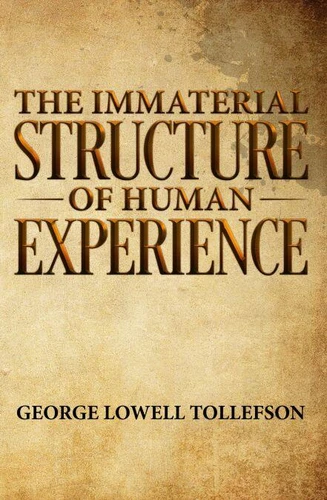
The Immaterial Structure of Human Experience
Par :Formats :
Disponible dans votre compte client Decitre ou Furet du Nord dès validation de votre commande. Le format ePub est :
- Compatible avec une lecture sur My Vivlio (smartphone, tablette, ordinateur)
- Compatible avec une lecture sur liseuses Vivlio
- Pour les liseuses autres que Vivlio, vous devez utiliser le logiciel Adobe Digital Edition. Non compatible avec la lecture sur les liseuses Kindle, Remarkable et Sony
 , qui est-ce ?
Notre partenaire de plateforme de lecture numérique où vous retrouverez l'ensemble de vos ebooks gratuitement
Pour en savoir plus sur nos ebooks, consultez notre aide en ligne ici
C'est si simple ! Lisez votre ebook avec l'app Vivlio sur votre tablette, mobile ou ordinateur :

- FormatePub
- ISBN978-1-393-65765-1
- EAN9781393657651
- Date de parution29/08/2019
- Protection num.pas de protection
- Infos supplémentairesepub
- ÉditeurRelay Publishing
Résumé
The Immaterial Structure of Human Experience is a philosophical work, a system. It is a quest into the workings of the human mind from the perspective of epistemology and philosophy of mind. Focusing on human experience from a subjective point of view, it does not attempt the kind of empirical approach which would be centered in the senses, as would be the case with one of the sciences. Instead, the book argues that although we experience our conscious awareness as enclosed within and conditioned by material circumstances, it can best be understood as an immediate and instantaneous expression of spirit.
This immaterialist approach has two goals. First, to establish a broadened empiricism that includes and is centered upon the experience of consciousness, and second, to demonstrate the priority of spirit over matter. It is a new approach to the question, "How do we know what we know?"
This immaterialist approach has two goals. First, to establish a broadened empiricism that includes and is centered upon the experience of consciousness, and second, to demonstrate the priority of spirit over matter. It is a new approach to the question, "How do we know what we know?"
A propos de George Lowell Tollefson

4,99 €
4,99 €


Song of the Spirit
E-book
4,99 €

Capitalism and Democracy
E-book
2,99 €
The System of the Mind
E-book
9,49 €
The Thinking Process
E-book
5,49 €
The Limits of Reason
E-book
5,49 €

A Healer of Nations
E-book
4,99 €


Ethical Considerations
E-book
3,99 €

Moral Democracy
E-book
3,99 €
3,99 €
The Thinking Arts
E-book
3,99 €