David Swift is a historian and author born in Liverpool in 1987. He has written for a variety of publications including the New Statesmen, Spectator, The Times, Independent, Tribune Magazine, Jewish Chronicle and many others. He is a regular contributor to UnHerd, and has appeared on Times Radio, BBC radio and BBC North West Tonight, discussing local history and identities. Scouse Republic is his third book.
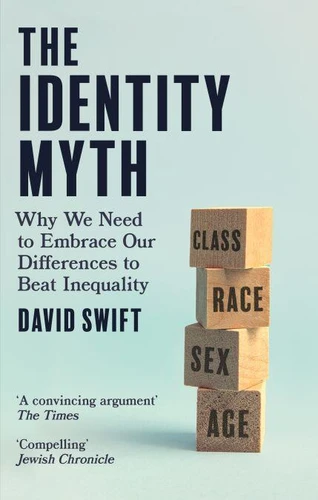
The Identity Myth. Why We Need to Embrace Our Differences to Beat Inequality
Par :Formats :
Disponible dans votre compte client Decitre ou Furet du Nord dès validation de votre commande. Le format ePub protégé est :
- Compatible avec une lecture sur My Vivlio (smartphone, tablette, ordinateur)
- Compatible avec une lecture sur liseuses Vivlio
- Pour les liseuses autres que Vivlio, vous devez utiliser le logiciel Adobe Digital Edition. Non compatible avec la lecture sur les liseuses Kindle, Remarkable et Sony
- Non compatible avec un achat hors France métropolitaine
 , qui est-ce ?
Notre partenaire de plateforme de lecture numérique où vous retrouverez l'ensemble de vos ebooks gratuitement
Pour en savoir plus sur nos ebooks, consultez notre aide en ligne ici
C'est si simple ! Lisez votre ebook avec l'app Vivlio sur votre tablette, mobile ou ordinateur :

- Nombre de pages320
- FormatePub
- ISBN978-0-349-13533-5
- EAN9780349135335
- Date de parution16/02/2022
- Protection num.Adobe DRM
- Infos supplémentairesepub
- ÉditeurConstable
Résumé
We are in crisis. As a society we have never been less connected. The internet and globalisation fuel ignorance and anger, while the disconnect between people's reality and perceived identities has never been greater. Karl Marx outlined the idea of a material 'base' and politico-cultural 'superstructure'. According to this formula, a material reality - wealth, income, occupation - determined your politics, leisure habits, tastes, and how you made sense of the world.
Today, the importance of material deprivation, in terms of threats to life, health and prosperity, are as acute as ever. But the identities apparently generated by these realities are increasingly detached from material circumstances. At the same time, different identities are needlessly conflated through a process of reeling off a list of -isms and -phobias, and are lumped together, as though these groups all somehow have something in common with one another.
Th is process is not just inappropriate but obscures the specific nature of problems being faced. In The Identity Myth, David Swift covers the four different kinds of identity most susceptible to this trend - class, race, sex and age. He considers how the boundaries of identities are policed and how diverse versions of the same identity can be deployed to different ends. Ultimately, it is not that identities are simply more 'complex' than they appear but that there are more important commonalities.
In a powerful call to arms, Swift argues that we must unite against these identity myths and embrace our differences to beat inequality.
Today, the importance of material deprivation, in terms of threats to life, health and prosperity, are as acute as ever. But the identities apparently generated by these realities are increasingly detached from material circumstances. At the same time, different identities are needlessly conflated through a process of reeling off a list of -isms and -phobias, and are lumped together, as though these groups all somehow have something in common with one another.
Th is process is not just inappropriate but obscures the specific nature of problems being faced. In The Identity Myth, David Swift covers the four different kinds of identity most susceptible to this trend - class, race, sex and age. He considers how the boundaries of identities are policed and how diverse versions of the same identity can be deployed to different ends. Ultimately, it is not that identities are simply more 'complex' than they appear but that there are more important commonalities.
In a powerful call to arms, Swift argues that we must unite against these identity myths and embrace our differences to beat inequality.