SOLDES
Jusqu'à -70% sur une sélection d'articles*

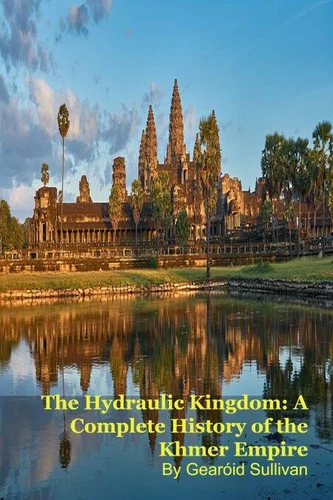
The Hydraulic Kingdom: A Complete History of the Khmer Empire
Par :Formats :
Disponible dans votre compte client Decitre ou Furet du Nord dès validation de votre commande. Le format ePub est :
- Compatible avec une lecture sur My Vivlio (smartphone, tablette, ordinateur)
- Compatible avec une lecture sur liseuses Vivlio
- Pour les liseuses autres que Vivlio, vous devez utiliser le logiciel Adobe Digital Edition. Non compatible avec la lecture sur les liseuses Kindle, Remarkable et Sony
 , qui est-ce ?
Notre partenaire de plateforme de lecture numérique où vous retrouverez l'ensemble de vos ebooks gratuitement
Pour en savoir plus sur nos ebooks, consultez notre aide en ligne ici
C'est si simple ! Lisez votre ebook avec l'app Vivlio sur votre tablette, mobile ou ordinateur :

- FormatePub
- ISBN8233454448
- EAN9798233454448
- Date de parution14/03/2026
- Protection num.pas de protection
- Infos supplémentairesepub
- ÉditeurLinda Balsamo
Résumé
The Hydraulic Kingdom: A Complete History of the Khmer Empire The Khmer Empire stands as one of the most extraordinary civilizations in human history - a hydraulic state that sustained nearly a million people on the Cambodian plain, built the largest religious monument in the world, and left an architectural, linguistic, and cultural legacy that continues to shape mainland Southeast Asia to the present day.
From the founding ceremony on Mount Mahendraparvata in 802 CE through the sack of Angkor in 1431 and the complex transformations of the post-Angkorian world, this comprehensive history traces every dimension of the empire's remarkable story. Drawing on the latest geoarchaeological research, the inscriptional record, the observations of the Chinese diplomat Zhou Daguan, and the findings of the Greater Angkor Project, this book examines not only the temple mountains and the divine kings but the hydraulic engineering genius, the social hierarchies, the enslaved labor, the market women, the fermented fish paste, and the classical dancers whose embodied knowledge survives to the present day.
It explores the devaraja ideology and the bodhisattva revolution of Jayavarman VII, the environmental crisis that silted the great barays, and the Theravada transformation that dissolved the institutional foundations of the imperial state. Equal parts architectural history, environmental study, social analysis, and civilizational biography, this is the definitive account of the world that built Angkor Wat - and what its rise, transformation, and endurance tell us about the possibilities and limits of human achievement.
From the founding ceremony on Mount Mahendraparvata in 802 CE through the sack of Angkor in 1431 and the complex transformations of the post-Angkorian world, this comprehensive history traces every dimension of the empire's remarkable story. Drawing on the latest geoarchaeological research, the inscriptional record, the observations of the Chinese diplomat Zhou Daguan, and the findings of the Greater Angkor Project, this book examines not only the temple mountains and the divine kings but the hydraulic engineering genius, the social hierarchies, the enslaved labor, the market women, the fermented fish paste, and the classical dancers whose embodied knowledge survives to the present day.
It explores the devaraja ideology and the bodhisattva revolution of Jayavarman VII, the environmental crisis that silted the great barays, and the Theravada transformation that dissolved the institutional foundations of the imperial state. Equal parts architectural history, environmental study, social analysis, and civilizational biography, this is the definitive account of the world that built Angkor Wat - and what its rise, transformation, and endurance tell us about the possibilities and limits of human achievement.