
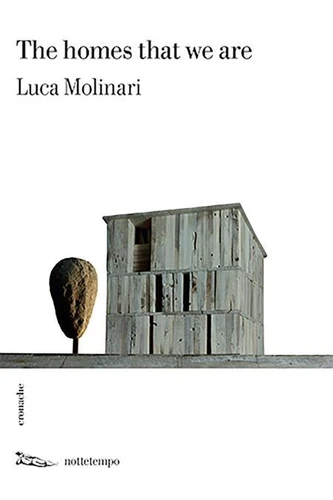
The homes that we are
Par :Formats :
Disponible dans votre compte client Decitre ou Furet du Nord dès validation de votre commande. Le format ePub est :
- Compatible avec une lecture sur My Vivlio (smartphone, tablette, ordinateur)
- Compatible avec une lecture sur liseuses Vivlio
- Pour les liseuses autres que Vivlio, vous devez utiliser le logiciel Adobe Digital Edition. Non compatible avec la lecture sur les liseuses Kindle, Remarkable et Sony
 , qui est-ce ?
Notre partenaire de plateforme de lecture numérique où vous retrouverez l'ensemble de vos ebooks gratuitement
Pour en savoir plus sur nos ebooks, consultez notre aide en ligne ici
C'est si simple ! Lisez votre ebook avec l'app Vivlio sur votre tablette, mobile ou ordinateur :

- Nombre de pages76
- FormatePub
- ISBN978-88-7452-745-8
- EAN9788874527458
- Date de parution10/09/2018
- Protection num.Digital Watermarking
- Taille3 Mo
- Infos supplémentairesepub
- ÉditeurNottetempo
Résumé
What do the house of the Three Little Pigs and Le Corbusier's Cabanon have in common? And the transparent Farnsworth House, built by Mies van Rohe for a much loved woman, and the rooms of the Big Brother house?
Is the house still the first asset that we own or did the young bourgeois dream vanish along with the boom? What shape do houses take in the age of the sharing economy and of architectural multiplication imposed by the emergencies of war and migration? What influence has Ikea had on our perception of not only space, but life itself?
Using clear and accessible language, starting with the story of a real house (that you can go into) "and ending with the physical and political space that we live in and need to re-examine, Luca Molinari tells us what kind of homes we are and have been and discusses the homes we should or could be, and above all he explains why without the home there can be no architecture.
Luca Molinari is a critic, curator and associate professor of History of Contemporary Architecture at the Second University of Naples (SUN).
He writes as an freelance author for many magazines and newspapers, as well as writing the architecture section of the weekly magazine L' Espresso. He is a member of the Superior Council for Cultural Heritage and Landscape. He curated the Italian Pavilion at the XII International Architecture Exhibition in Venice and the architecture and urban planning sections of the 2001-2004 Milan Triennale, as well as a series of exhibitions and events dedicated to the changing shape of contemporary living.
He writes as an freelance author for many magazines and newspapers, as well as writing the architecture section of the weekly magazine L' Espresso. He is a member of the Superior Council for Cultural Heritage and Landscape. He curated the Italian Pavilion at the XII International Architecture Exhibition in Venice and the architecture and urban planning sections of the 2001-2004 Milan Triennale, as well as a series of exhibitions and events dedicated to the changing shape of contemporary living.
A propos de Luca Molinari
11,49 €