SOLDES
Jusqu'à -70% sur une sélection d'articles*

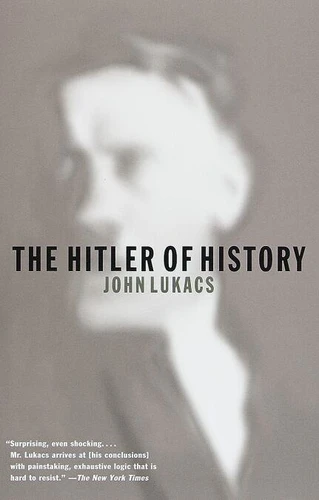
The Hitler of History
Par :Formats :
Disponible dans votre compte client Decitre ou Furet du Nord dès validation de votre commande. Le format ePub protégé est :
- Compatible avec une lecture sur My Vivlio (smartphone, tablette, ordinateur)
- Compatible avec une lecture sur liseuses Vivlio
- Pour les liseuses autres que Vivlio, vous devez utiliser le logiciel Adobe Digital Edition. Non compatible avec la lecture sur les liseuses Kindle, Remarkable et Sony
- Non compatible avec un achat hors France métropolitaine
 , qui est-ce ?
Notre partenaire de plateforme de lecture numérique où vous retrouverez l'ensemble de vos ebooks gratuitement
Pour en savoir plus sur nos ebooks, consultez notre aide en ligne ici
C'est si simple ! Lisez votre ebook avec l'app Vivlio sur votre tablette, mobile ou ordinateur :

- Nombre de pages304
- FormatePub
- ISBN978-0-307-76561-1
- EAN9780307765611
- Date de parution06/04/2011
- Protection num.Adobe DRM
- Taille2 Mo
- Infos supplémentairesepub
- ÉditeurVintage
Résumé
In this brilliant, strikingly original book, historian John Lukacs delves to the core of Adolf Hitler's life and mind by examining him through the lenses of his surprisingly diverse biographers. Since 1945 there have been more than one hundred biographies of Hitler, and countless other books on him and the Third Reich. What happens when so many people reinterpret the life of a single individual? Dangerously, the cumulative portrait that begins to emerge can suggest the face of a mythic antihero whose crimes and errors blur behind an aura of power and conquest.
By reversing the process, by making Hitler's biographers--rather than Hitler himself--the subject of inquiry, Lukacs reveals the contradictions that take us back to the true Hitler of history. Like an attorney, Lukacs puts the biographies on trial. He gives a masterly account of all the major works and of the personalities, methods, and careers of the biographers (one cannot separate the historian from his history, particularly in this arena); he looks at what is still not known (and probably never will be) about Hitler; he considers various crucial aspects of the real Hitler; and he shows how different biographers have either advanced our understanding or gone off track.
By singling out those who have been involved in, or co-opted into, an implicit "rehabilitation of Hitler, " Lukacs draws powerful conclusions about Hitler's essential differences from other monsters of history, such as Napoleon, Mussolini, and Stalin, and--equally important--about Hitler's place in the history of this century and of the world.
By reversing the process, by making Hitler's biographers--rather than Hitler himself--the subject of inquiry, Lukacs reveals the contradictions that take us back to the true Hitler of history. Like an attorney, Lukacs puts the biographies on trial. He gives a masterly account of all the major works and of the personalities, methods, and careers of the biographers (one cannot separate the historian from his history, particularly in this arena); he looks at what is still not known (and probably never will be) about Hitler; he considers various crucial aspects of the real Hitler; and he shows how different biographers have either advanced our understanding or gone off track.
By singling out those who have been involved in, or co-opted into, an implicit "rehabilitation of Hitler, " Lukacs draws powerful conclusions about Hitler's essential differences from other monsters of history, such as Napoleon, Mussolini, and Stalin, and--equally important--about Hitler's place in the history of this century and of the world.