SOLDES
Jusqu'à -70% sur une sélection d'articles*

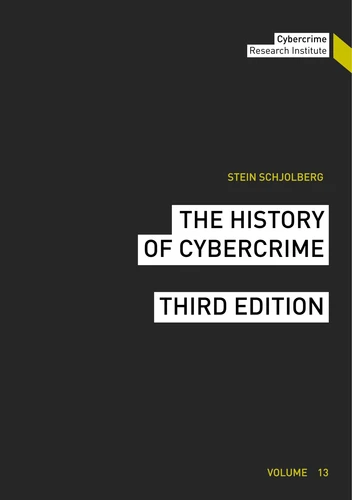
The History of Cybercrime
Par :Formats :
Disponible dans votre compte client Decitre ou Furet du Nord dès validation de votre commande. Le format ePub est :
- Compatible avec une lecture sur My Vivlio (smartphone, tablette, ordinateur)
- Compatible avec une lecture sur liseuses Vivlio
- Pour les liseuses autres que Vivlio, vous devez utiliser le logiciel Adobe Digital Edition. Non compatible avec la lecture sur les liseuses Kindle, Remarkable et Sony
 , qui est-ce ?
Notre partenaire de plateforme de lecture numérique où vous retrouverez l'ensemble de vos ebooks gratuitement
Pour en savoir plus sur nos ebooks, consultez notre aide en ligne ici
C'est si simple ! Lisez votre ebook avec l'app Vivlio sur votre tablette, mobile ou ordinateur :

- Nombre de pages296
- FormatePub
- ISBN978-3-7504-5974-8
- EAN9783750459748
- Date de parution09/03/2020
- Protection num.Digital Watermarking
- Taille308 Ko
- Infos supplémentairesepub
- ÉditeurBooks on Demand
Résumé
The third edition of this book presents the history of computer crime and cybercrime from the very beginning with punch cards, to the latest developments - including the attacks in the context of the 2016 US Election.
Today the technological development of social media, such as Google, Facebook, YouTube, Twitter, and more, have been so rapid and the impact on society so fast and enormous, that codes of ethics, and public sentiments of justice implemented in criminal legislations, have not kept pace.
Conducts in social media need a better protection by criminal laws.
The United Nations Declarations and principles for the protection of individual and human rights are fundamental rights also in Cyberspace. The same rights that people have offline must also be protected online. Cyber attacks against critical information infrastructures of sovereign States, public institutions, private industry and individuals, must necessitate a response for global solutions. In conducting investigation and prosecution of cybercrime countries should understand that international coordination and cooperation are necessary in prosecuting cross-border cybercrime.
It is critical that the police work closely with government and other elements of the criminal justice system, Interpol, Europol and other international organizations.
The United Nations Declarations and principles for the protection of individual and human rights are fundamental rights also in Cyberspace. The same rights that people have offline must also be protected online. Cyber attacks against critical information infrastructures of sovereign States, public institutions, private industry and individuals, must necessitate a response for global solutions. In conducting investigation and prosecution of cybercrime countries should understand that international coordination and cooperation are necessary in prosecuting cross-border cybercrime.
It is critical that the police work closely with government and other elements of the criminal justice system, Interpol, Europol and other international organizations.