SOLDES
Jusqu'à -70% sur une sélection d'articles*

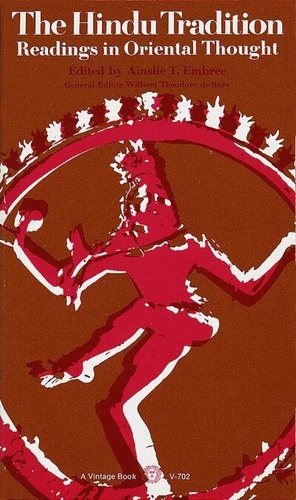
The Hindu Tradition. Readings in Oriental Thought
Par : ,Formats :
Disponible dans votre compte client Decitre ou Furet du Nord dès validation de votre commande. Le format ePub protégé est :
- Compatible avec une lecture sur My Vivlio (smartphone, tablette, ordinateur)
- Compatible avec une lecture sur liseuses Vivlio
- Pour les liseuses autres que Vivlio, vous devez utiliser le logiciel Adobe Digital Edition. Non compatible avec la lecture sur les liseuses Kindle, Remarkable et Sony
- Non compatible avec un achat hors France métropolitaine
 , qui est-ce ?
Notre partenaire de plateforme de lecture numérique où vous retrouverez l'ensemble de vos ebooks gratuitement
Pour en savoir plus sur nos ebooks, consultez notre aide en ligne ici
C'est si simple ! Lisez votre ebook avec l'app Vivlio sur votre tablette, mobile ou ordinateur :

- Nombre de pages384
- FormatePub
- ISBN978-0-307-77909-0
- EAN9780307779090
- Date de parution09/03/2011
- Protection num.Adobe DRM
- Taille2 Mo
- Infos supplémentairesepub
- ÉditeurVintage
Résumé
This book, compiled from basic Hindu writings, is an exploration of the essential meaning of the Hindu tradition, the way of thinking and acting that has dominated life in India for the last three thousand years. Selections from religious, literary and philosophic works are preceded by introductory material that summarizes historical developments and cultural movements. While much attention is given to religion, many selections deal with social life, political relationships, and the Indian attitude to human love and passion.
The arrangement of the material suggests the growth and development of Indian life through the centuries, and makes clear that Indian culture has never been static, but rather has been characterized at all times by a remarkable vitality and creativity. The selections range in time from the Rig Veda, composed around 1000 B. C., to the writings of Radhakrishnan, formerly the President of India. They illustrate both the continuity of the Hindu tradition and its vitality, for Hinduism is probably more vibrant and alive at the present time than it has been for many centuries.
The ideals and values, the unquestioned assumptions and the persistent doubts that are presented here from the literature of the past are the fundamental ingredients of the life of modern India.
The arrangement of the material suggests the growth and development of Indian life through the centuries, and makes clear that Indian culture has never been static, but rather has been characterized at all times by a remarkable vitality and creativity. The selections range in time from the Rig Veda, composed around 1000 B. C., to the writings of Radhakrishnan, formerly the President of India. They illustrate both the continuity of the Hindu tradition and its vitality, for Hinduism is probably more vibrant and alive at the present time than it has been for many centuries.
The ideals and values, the unquestioned assumptions and the persistent doubts that are presented here from the literature of the past are the fundamental ingredients of the life of modern India.