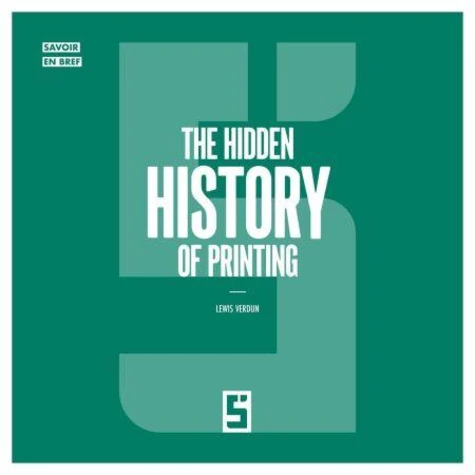
The Hidden History of Printing, published by Five Minutes as part of the SAVOIR EN BREF collection, takes readers on a compelling journey through the forgotten origins and dramatic transformations of a technology that reshaped knowledge. Drawing on recent scholarship, this short book reveals that Chinese woodblock printing and Korean metal type preceded Gutenberg by centuries. The narrative explains how the reproduction of Buddhist sutras, the monumental Tripitaka Koreana and the 1377 Jikji - the world's oldest extant book printed with movable type - laid the foundations for mass communication.
It then examines how Europe's adoption of the screw press accelerated religious reform, scientific writing and the book trade. Finally, it explores today's innovations : digital printing, eco friendly inks, and 3D printed metamaterials that damp vibrations. With clear language and concrete examples, the author invites readers to reconsider conventional Eurocentric accounts and appreciate the multiple cultural contributions that shaped printing.
This concise, fact rich volume is both a historical investigation and a reflection on future challenges, encouraging readers to value our shared technological heritage and to imagine new possibilities for the written word.
The Hidden History of Printing, published by Five Minutes as part of the SAVOIR EN BREF collection, takes readers on a compelling journey through the forgotten origins and dramatic transformations of a technology that reshaped knowledge. Drawing on recent scholarship, this short book reveals that Chinese woodblock printing and Korean metal type preceded Gutenberg by centuries. The narrative explains how the reproduction of Buddhist sutras, the monumental Tripitaka Koreana and the 1377 Jikji - the world's oldest extant book printed with movable type - laid the foundations for mass communication.
It then examines how Europe's adoption of the screw press accelerated religious reform, scientific writing and the book trade. Finally, it explores today's innovations : digital printing, eco friendly inks, and 3D printed metamaterials that damp vibrations. With clear language and concrete examples, the author invites readers to reconsider conventional Eurocentric accounts and appreciate the multiple cultural contributions that shaped printing.
This concise, fact rich volume is both a historical investigation and a reflection on future challenges, encouraging readers to value our shared technological heritage and to imagine new possibilities for the written word.