SOLDES
Jusqu'à -70% sur une sélection d'articles*

Nouveauté
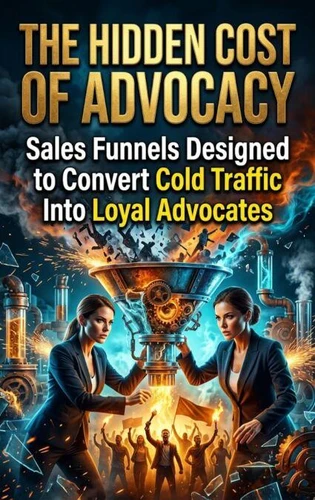
The Hidden Cost of Advocacy. Sales Funnels Designed to Convert Cold Traffic Into Loyal Advocates
Par :Formats :
Disponible dans votre compte client Decitre ou Furet du Nord dès validation de votre commande. Le format ePub est :
- Compatible avec une lecture sur My Vivlio (smartphone, tablette, ordinateur)
- Compatible avec une lecture sur liseuses Vivlio
- Pour les liseuses autres que Vivlio, vous devez utiliser le logiciel Adobe Digital Edition. Non compatible avec la lecture sur les liseuses Kindle, Remarkable et Sony
 , qui est-ce ?
Notre partenaire de plateforme de lecture numérique où vous retrouverez l'ensemble de vos ebooks gratuitement
Pour en savoir plus sur nos ebooks, consultez notre aide en ligne ici
C'est si simple ! Lisez votre ebook avec l'app Vivlio sur votre tablette, mobile ou ordinateur :

- Nombre de pages168
- FormatePub
- ISBN978-3-565-45492-1
- EAN9783565454921
- Date de parution23/05/2026
- Protection num.pas de protection
- Taille2 Mo
- Infos supplémentairesepub
- ÉditeurEmphaloz Publishing House
Résumé
This book examines how the hidden costs of advocacy emerge when sales funnels are engineered to convert cold traffic into loyal advocates, revealing a systemic tension between operational efficiency and genuine relational depth. It explores how the pursuit of optimized conversion metrics can gradually reshape the meaning of customer loyalty, turning advocacy into a measurable output rather than an organic expression of trust and connection.
The first area of focus investigates incentive structures within funnel systems, where teams are often rewarded for short-term conversion performance and rapid movement through pipeline stages.
While these incentives can improve measurable efficiency, they may also weaken the slower relationship-building processes that sustain authentic advocacy over time. Pressure to meet immediate targets can encourage repetitive offers, market saturation, and tactics that generate clicks while quietly eroding long-term brand sentiment and exclusivity. The second examines information flow and automated personalization systems that rely on segmentation, behavioral tracking, and historical data to scale engagement.
Although these systems increase efficiency, they can also create feedback loops that reduce sensitivity to nuanced customer motivations and emerging shifts in buyer intent. In this environment, customers with strong influence potential may be undervalued if funnel models prioritize transaction frequency over relational impact. The third explores organizational alignment between marketing and sales, particularly how shared definitions of lead quality and conversion success can redirect cross-functional cooperation toward funnel optimization at the expense of broader advocacy initiatives.
When funnel velocity becomes the dominant performance lens, investment in post-sale community building and long-term engagement may decline because those activities are less immediately measurable.
While these incentives can improve measurable efficiency, they may also weaken the slower relationship-building processes that sustain authentic advocacy over time. Pressure to meet immediate targets can encourage repetitive offers, market saturation, and tactics that generate clicks while quietly eroding long-term brand sentiment and exclusivity. The second examines information flow and automated personalization systems that rely on segmentation, behavioral tracking, and historical data to scale engagement.
Although these systems increase efficiency, they can also create feedback loops that reduce sensitivity to nuanced customer motivations and emerging shifts in buyer intent. In this environment, customers with strong influence potential may be undervalued if funnel models prioritize transaction frequency over relational impact. The third explores organizational alignment between marketing and sales, particularly how shared definitions of lead quality and conversion success can redirect cross-functional cooperation toward funnel optimization at the expense of broader advocacy initiatives.
When funnel velocity becomes the dominant performance lens, investment in post-sale community building and long-term engagement may decline because those activities are less immediately measurable.