SOLDES
Jusqu'à -70% sur une sélection d'articles*

Nouveauté
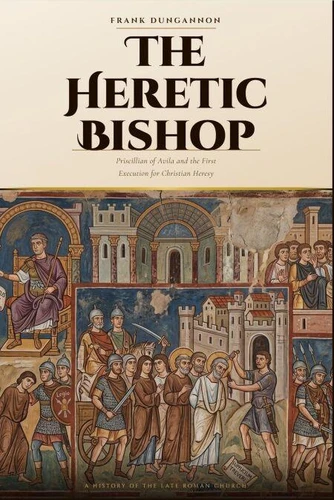
The Heretic Bishop, Priscillian of Avila and the First Execution for Christian Heresy
Par :Formats :
Disponible dans votre compte client Decitre ou Furet du Nord dès validation de votre commande. Le format ePub est :
- Compatible avec une lecture sur My Vivlio (smartphone, tablette, ordinateur)
- Compatible avec une lecture sur liseuses Vivlio
- Pour les liseuses autres que Vivlio, vous devez utiliser le logiciel Adobe Digital Edition. Non compatible avec la lecture sur les liseuses Kindle, Remarkable et Sony
 , qui est-ce ?
Notre partenaire de plateforme de lecture numérique où vous retrouverez l'ensemble de vos ebooks gratuitement
Pour en savoir plus sur nos ebooks, consultez notre aide en ligne ici
C'est si simple ! Lisez votre ebook avec l'app Vivlio sur votre tablette, mobile ou ordinateur :

- FormatePub
- ISBN8235540750
- EAN9798235540750
- Date de parution25/06/2026
- Protection num.pas de protection
- Infos supplémentairesepub
- ÉditeurIoakim Ioakim
Résumé
The Heretic Bishop, Priscillian of Avila and the First Execution for Christian Heresy In the summer of 385 CE, a Spanish bishop was beheaded at the imperial court of Trier by order of the usurper Magnus Maximus. His name was Priscillian of Avila, and his execution marked a threshold that the western world has never entirely crossed back: the first time in history that a Christian was put to death by a Christian state for the content of his theological beliefs.
The precedent it set would echo through the medieval inquisitions, the burning of Jan Hus, and the religious violence of the Reformation era. Priscillian was no ordinary dissident. A wealthy Iberian nobleman of formidable intellectual gifts, he built across the 370s and 380s a movement that combined rigorous asceticism, sophisticated cosmological theology, and a radical inclusion of women in communal religious life that the episcopal establishment found as threatening as anything in his doctrines.
His movement drew on Egyptian Gnostic-Hermetic traditions brought to Hispania by the mysterious Marcus of Memphis, absorbed them into a passionate engagement with Nicene Christianity, and produced communities whose durability would outlast the empire that destroyed their founder by two full centuries. The Heretic Bishop is the first comprehensive narrative account of this extraordinary controversy, its theology, its politics, its violence, and its long, troubled legacy for the history of western civilisation.
The precedent it set would echo through the medieval inquisitions, the burning of Jan Hus, and the religious violence of the Reformation era. Priscillian was no ordinary dissident. A wealthy Iberian nobleman of formidable intellectual gifts, he built across the 370s and 380s a movement that combined rigorous asceticism, sophisticated cosmological theology, and a radical inclusion of women in communal religious life that the episcopal establishment found as threatening as anything in his doctrines.
His movement drew on Egyptian Gnostic-Hermetic traditions brought to Hispania by the mysterious Marcus of Memphis, absorbed them into a passionate engagement with Nicene Christianity, and produced communities whose durability would outlast the empire that destroyed their founder by two full centuries. The Heretic Bishop is the first comprehensive narrative account of this extraordinary controversy, its theology, its politics, its violence, and its long, troubled legacy for the history of western civilisation.