SOLDES
Jusqu'à -70% sur une sélection d'articles*

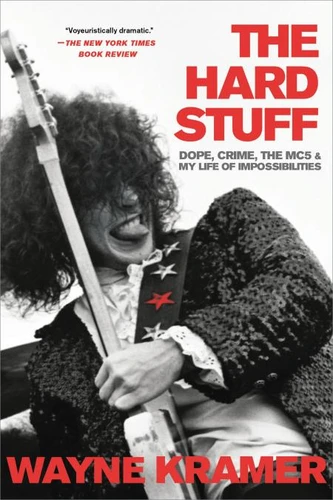
The Hard Stuff. Dope, Crime, the MC5, and My Life of Impossibilities
Par :Formats :
Disponible dans votre compte client Decitre ou Furet du Nord dès validation de votre commande. Le format ePub protégé est :
- Compatible avec une lecture sur My Vivlio (smartphone, tablette, ordinateur)
- Compatible avec une lecture sur liseuses Vivlio
- Pour les liseuses autres que Vivlio, vous devez utiliser le logiciel Adobe Digital Edition. Non compatible avec la lecture sur les liseuses Kindle, Remarkable et Sony
- Non compatible avec un achat hors France métropolitaine
 , qui est-ce ?
Notre partenaire de plateforme de lecture numérique où vous retrouverez l'ensemble de vos ebooks gratuitement
Pour en savoir plus sur nos ebooks, consultez notre aide en ligne ici
C'est si simple ! Lisez votre ebook avec l'app Vivlio sur votre tablette, mobile ou ordinateur :

- Nombre de pages320
- FormatePub
- ISBN978-0-306-92153-7
- EAN9780306921537
- Date de parution13/08/2018
- Protection num.Adobe DRM
- Infos supplémentairesepub
- ÉditeurDa Capo
Résumé
The first memoir by Wayne Kramer, legendary guitarist and cofounder of quintessential Detroit proto-punk legends The MC5 "Voyeuristically dramatic."-THE NEW YORK TIMES BOOK REVIEW In January 1969, before the world heard a note of their music, the MC5 was on the cover of Rolling Stone. Led by legendary guitarist Wayne Kramer, the band was a reflection of the times: exciting, sexy, violent, chaotic, and even out of control.
The missing link between free jazz and punk rock, the MC5 toured the country, played alongside music legends, and had a rabid following, their music acting as the soundtrack to the blossoming blue collar youth movement. Kramer wanted to redefine what a rock 'n' roll group was capable of, and though there was power in reaching for that, it was also a recipe for personal and professional disaster. The band recorded three major label albums but, by 1972-it was all over.
Kramer's story is (literally) a revolutionary one, but it's also the deeply personal struggle of an addict and an artist, a rebel with a great tale to tell. From the glory days of Detroit to the junk-sick streets of the East Village, from Key West to Nashville and sunny L. A., in and out of prison and on and off of drugs, Kramer's is the classic journeyman narrative, but with a twist: he's here to remind us that revolution is always an option.
The missing link between free jazz and punk rock, the MC5 toured the country, played alongside music legends, and had a rabid following, their music acting as the soundtrack to the blossoming blue collar youth movement. Kramer wanted to redefine what a rock 'n' roll group was capable of, and though there was power in reaching for that, it was also a recipe for personal and professional disaster. The band recorded three major label albums but, by 1972-it was all over.
Kramer's story is (literally) a revolutionary one, but it's also the deeply personal struggle of an addict and an artist, a rebel with a great tale to tell. From the glory days of Detroit to the junk-sick streets of the East Village, from Key West to Nashville and sunny L. A., in and out of prison and on and off of drugs, Kramer's is the classic journeyman narrative, but with a twist: he's here to remind us that revolution is always an option.