SOLDES
Jusqu'à -70% sur une sélection d'articles*

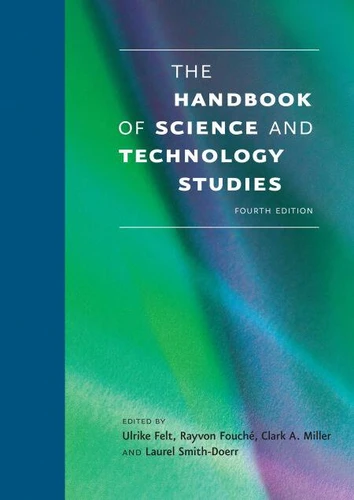
The Handbook of Science and Technology Studies, fourth edition
Par : , , ,Formats :
Disponible dans votre compte client Decitre ou Furet du Nord dès validation de votre commande. Le format ePub protégé est :
- Compatible avec une lecture sur My Vivlio (smartphone, tablette, ordinateur)
- Compatible avec une lecture sur liseuses Vivlio
- Pour les liseuses autres que Vivlio, vous devez utiliser le logiciel Adobe Digital Edition. Non compatible avec la lecture sur les liseuses Kindle, Remarkable et Sony
- Non compatible avec un achat hors France métropolitaine
 , qui est-ce ?
Notre partenaire de plateforme de lecture numérique où vous retrouverez l'ensemble de vos ebooks gratuitement
Pour en savoir plus sur nos ebooks, consultez notre aide en ligne ici
C'est si simple ! Lisez votre ebook avec l'app Vivlio sur votre tablette, mobile ou ordinateur :

- Nombre de pages1208
- FormatePub
- ISBN978-0-262-33811-0
- EAN9780262338110
- Date de parution16/12/2016
- Protection num.Adobe DRM
- Taille4 Mo
- Infos supplémentairesepub
- ÉditeurThe MIT Press
Résumé
The fourth edition of an authoritative overview, with all new chapters that capture the state of the art in a rapidly growing field. Science and Technology Studies (STS) is a flourishing interdisciplinary field that examines the transformative power of science and technology to arrange and rearrange contemporary societies. The Handbook of Science and Technology Studies provides a comprehensive and authoritative overview of the field, reviewing current research and major theoretical and methodological approaches in a way that is accessible to both new and established scholars from a range of disciplines.
This new edition, sponsored by the Society for Social Studies of Science, is the fourth in a series of volumes that have defined the field of STS. It features 36 chapters, each written for the fourth edition, that capture the state of the art in a rich and rapidly growing field. One especially notable development is the increasing integration of feminist, gender, and postcolonial studies into the body of STS knowledge.
The book covers methods and participatory practices in STS research; mechanisms by which knowledge, people, and societies are coproduced; the design, construction, and use of material devices and infrastructures; the organization and governance of science; and STS and societal challenges including aging, agriculture, security, disasters, environmental justice, and climate change.
This new edition, sponsored by the Society for Social Studies of Science, is the fourth in a series of volumes that have defined the field of STS. It features 36 chapters, each written for the fourth edition, that capture the state of the art in a rich and rapidly growing field. One especially notable development is the increasing integration of feminist, gender, and postcolonial studies into the body of STS knowledge.
The book covers methods and participatory practices in STS research; mechanisms by which knowledge, people, and societies are coproduced; the design, construction, and use of material devices and infrastructures; the organization and governance of science; and STS and societal challenges including aging, agriculture, security, disasters, environmental justice, and climate change.