SOLDES
Jusqu'à -70% sur une sélection d'articles*

Nouveauté
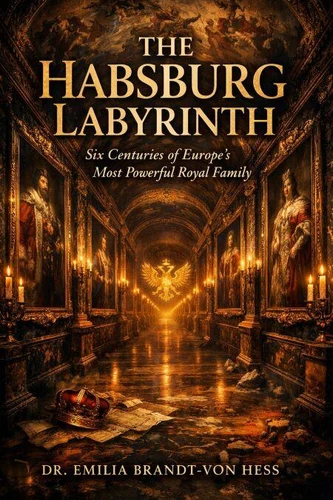
The Habsburg Labyrinth: Six Centuries of Europe's Most Powerful Royal Family
Par :Formats :
Disponible dans votre compte client Decitre ou Furet du Nord dès validation de votre commande. Le format ePub est :
- Compatible avec une lecture sur My Vivlio (smartphone, tablette, ordinateur)
- Compatible avec une lecture sur liseuses Vivlio
- Pour les liseuses autres que Vivlio, vous devez utiliser le logiciel Adobe Digital Edition. Non compatible avec la lecture sur les liseuses Kindle, Remarkable et Sony
 , qui est-ce ?
Notre partenaire de plateforme de lecture numérique où vous retrouverez l'ensemble de vos ebooks gratuitement
Pour en savoir plus sur nos ebooks, consultez notre aide en ligne ici
C'est si simple ! Lisez votre ebook avec l'app Vivlio sur votre tablette, mobile ou ordinateur :

- FormatePub
- ISBN8233084249
- EAN9798233084249
- Date de parution04/06/2026
- Protection num.pas de protection
- Infos supplémentairesepub
- ÉditeurLinda Balsamo
Résumé
The Habsburg Labyrinth: Six Centuries of Europe's Most Powerful Royal Family Dr. Emilia Brandt-von Hess They did not conquer Europe. They married it. While other dynasties sent armies, the Habsburgs sent wedding parties. While rivals drew swords, the Habsburgs drew up marriage contracts. The result was the most extraordinary accumulation of power in the history of Western civilization: a single family that, through patience, strategy, and an almost supernatural talent for being in the right place at the right moment, came to govern an empire stretching from Peru to Poland, from the Philippines to Flanders, in which the sun genuinely, measurably, never set.
For six centuries they held. Through the Protestant Reformation, which split their empire down the middle. Through the Thirty Years' War, which killed one in three people in the German lands and left a continent in ruins. Through Napoleon, who dissolved the thousand-year-old Holy Roman Empire with a single proclamation and married one of their daughters as consolation. Through the revolutions of 1848, which shook every throne in Europe and yet left a teenage Habsburg boy, Franz Joseph, calmly ascending the steps to one of the most powerful imperial thrones in the world.
This is that story, told as it has never quite been told before. Not as a parade of monarchs and battles, but as a human drama of extraordinary intimacy and impossible scale: the young Maria Theresa, twenty-three years old and newly widowed of her political protection, standing before the Hungarian Diet with her infant son in her arms and her empire dissolving around her, asking men who owed her nothing for everything they had.
The obsessive Philip II, working by lamplight in the stone corridors of El Escorial, annotating dispatches from Lima and Manila and the burning Netherlands in the same meticulous hand. The brilliant, impossible Joseph II, so far ahead of his time that his own empire could not survive the pace of his thinking. And Franz Joseph, rising at half past three every morning for sixty-eight years, sitting at his desk in the pre-dawn dark, doing what the office required long after the world that office was meant to govern had ceased to exist.
But The Habsburg Labyrinth is not only a book about power. It is a book about what power costs. About the children raised as diplomatic instruments and the marriages arranged before the parties could speak. About the wars fought to defend territories that no single person could visit in a lifetime and the debts accumulated to fund them. About the moment when the most sophisticated dynasty in history looked at the Balkans in the summer of 1914 and made a decision that ended everything they had built across six hundred years.
And it is, finally, a book about what remains. The Vienna that still plays Mahler in the same concert hall the Habsburgs built. The families scattered across a dozen nations that were once one empire. The son of the last emperor, Otto von Habsburg, who spent his life building the European Union as though trying to reconstruct, on a foundation of democracy rather than dynasty, the cosmopolitan civilization his ancestors had created and then lost.
Dr. Emilia Brandt-von Hess has spent two decades in the archives of Vienna, Prague, Budapest, and Madrid tracing this story to its sources. The result is history written with the urgency of a thriller and the authority of a lifetime's scholarship: precise, propulsive, and impossible to put down. Six centuries. One family. The story of how Europe became what it is, and why it still bears the marks of what it was.
The labyrinth is open. The only question is whether you can stop before you reach the end.
For six centuries they held. Through the Protestant Reformation, which split their empire down the middle. Through the Thirty Years' War, which killed one in three people in the German lands and left a continent in ruins. Through Napoleon, who dissolved the thousand-year-old Holy Roman Empire with a single proclamation and married one of their daughters as consolation. Through the revolutions of 1848, which shook every throne in Europe and yet left a teenage Habsburg boy, Franz Joseph, calmly ascending the steps to one of the most powerful imperial thrones in the world.
This is that story, told as it has never quite been told before. Not as a parade of monarchs and battles, but as a human drama of extraordinary intimacy and impossible scale: the young Maria Theresa, twenty-three years old and newly widowed of her political protection, standing before the Hungarian Diet with her infant son in her arms and her empire dissolving around her, asking men who owed her nothing for everything they had.
The obsessive Philip II, working by lamplight in the stone corridors of El Escorial, annotating dispatches from Lima and Manila and the burning Netherlands in the same meticulous hand. The brilliant, impossible Joseph II, so far ahead of his time that his own empire could not survive the pace of his thinking. And Franz Joseph, rising at half past three every morning for sixty-eight years, sitting at his desk in the pre-dawn dark, doing what the office required long after the world that office was meant to govern had ceased to exist.
But The Habsburg Labyrinth is not only a book about power. It is a book about what power costs. About the children raised as diplomatic instruments and the marriages arranged before the parties could speak. About the wars fought to defend territories that no single person could visit in a lifetime and the debts accumulated to fund them. About the moment when the most sophisticated dynasty in history looked at the Balkans in the summer of 1914 and made a decision that ended everything they had built across six hundred years.
And it is, finally, a book about what remains. The Vienna that still plays Mahler in the same concert hall the Habsburgs built. The families scattered across a dozen nations that were once one empire. The son of the last emperor, Otto von Habsburg, who spent his life building the European Union as though trying to reconstruct, on a foundation of democracy rather than dynasty, the cosmopolitan civilization his ancestors had created and then lost.
Dr. Emilia Brandt-von Hess has spent two decades in the archives of Vienna, Prague, Budapest, and Madrid tracing this story to its sources. The result is history written with the urgency of a thriller and the authority of a lifetime's scholarship: precise, propulsive, and impossible to put down. Six centuries. One family. The story of how Europe became what it is, and why it still bears the marks of what it was.
The labyrinth is open. The only question is whether you can stop before you reach the end.