SOLDES
Jusqu'à -70% sur une sélection d'articles*

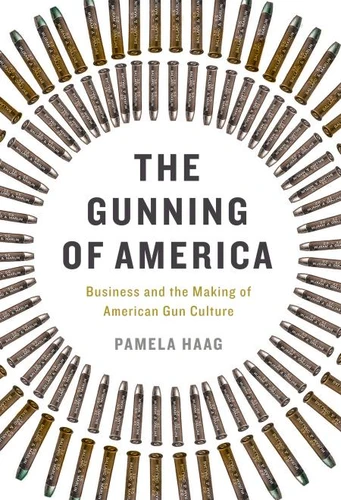
The Gunning of America. Business and the Making of American Gun Culture
Par :Formats :
Disponible dans votre compte client Decitre ou Furet du Nord dès validation de votre commande. Le format ePub protégé est :
- Compatible avec une lecture sur My Vivlio (smartphone, tablette, ordinateur)
- Compatible avec une lecture sur liseuses Vivlio
- Pour les liseuses autres que Vivlio, vous devez utiliser le logiciel Adobe Digital Edition. Non compatible avec la lecture sur les liseuses Kindle, Remarkable et Sony
- Non compatible avec un achat hors France métropolitaine
 , qui est-ce ?
Notre partenaire de plateforme de lecture numérique où vous retrouverez l'ensemble de vos ebooks gratuitement
Pour en savoir plus sur nos ebooks, consultez notre aide en ligne ici
C'est si simple ! Lisez votre ebook avec l'app Vivlio sur votre tablette, mobile ou ordinateur :

- Nombre de pages528
- FormatePub
- ISBN978-0-465-09856-9
- EAN9780465098569
- Date de parution18/04/2016
- Protection num.Adobe DRM
- Infos supplémentairesepub
- ÉditeurBasic Books
Résumé
Americans have always loved guns. This special bond was forged during the American Revolution and sanctified by the Second Amendment. It is because of this exceptional relationship that American civilians are more heavily armed than the citizens of any other nation. Or so we're told. In The Gunning of America, historian Pamela Haag overturns this conventional wisdom. American gun culture, she argues, developed not because the gun was exceptional, but precisely because it was not: guns proliferated in America because throughout most of the nation's history, they were perceived as an unexceptional commodity, no different than buttons or typewriters.
Focusing on the history of the Winchester Repeating Arms Company, one of the most iconic arms manufacturers in America, Haag challenges many basic assumptions of how and when America became a gun culture. Under the leadership of Oliver Winchester and his heirs, the company used aggressive, sometimes ingenious sales and marketing techniques to create new markets for their product. Guns have never "sold themselves"; rather, through advertising and innovative distribution campaigns, the gun industry did.
Through the meticulous examination of gun industry archives, Haag challenges the myth of a primal bond between Americans and their firearms. Over the course of its 150 year history, the Winchester Repeating Arms Company sold over 8 million guns. But Oliver Winchester-a shirtmaker in his previous career-had no apparent qualms about a life spent arming America. His daughter-in-law Sarah Winchester was a different story.
Legend holds that Sarah was haunted by what she considered a vast blood fortune, and became convinced that the ghosts of rifle victims were haunting her. She channeled much of her inheritance, and her conflicted conscience, into a monstrous estate now known as the Winchester Mystery House, where she sought refuge from this ever-expanding army of phantoms. In this provocative and deeply-researched work of narrative history, Haag fundamentally revises the history of arms in America, and in so doing explodes the clichéthat have created and sustained our lethal gun culture.
Focusing on the history of the Winchester Repeating Arms Company, one of the most iconic arms manufacturers in America, Haag challenges many basic assumptions of how and when America became a gun culture. Under the leadership of Oliver Winchester and his heirs, the company used aggressive, sometimes ingenious sales and marketing techniques to create new markets for their product. Guns have never "sold themselves"; rather, through advertising and innovative distribution campaigns, the gun industry did.
Through the meticulous examination of gun industry archives, Haag challenges the myth of a primal bond between Americans and their firearms. Over the course of its 150 year history, the Winchester Repeating Arms Company sold over 8 million guns. But Oliver Winchester-a shirtmaker in his previous career-had no apparent qualms about a life spent arming America. His daughter-in-law Sarah Winchester was a different story.
Legend holds that Sarah was haunted by what she considered a vast blood fortune, and became convinced that the ghosts of rifle victims were haunting her. She channeled much of her inheritance, and her conflicted conscience, into a monstrous estate now known as the Winchester Mystery House, where she sought refuge from this ever-expanding army of phantoms. In this provocative and deeply-researched work of narrative history, Haag fundamentally revises the history of arms in America, and in so doing explodes the clichéthat have created and sustained our lethal gun culture.