SOLDES
Jusqu'à -70% sur une sélection d'articles*

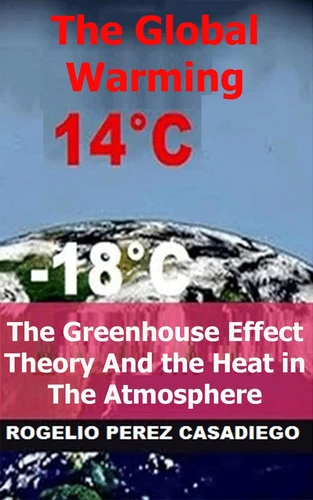
The Greenhouse Effect Theory And the Heat in The Atmosphere; The Global Warming
Par :Formats :
Disponible dans votre compte client Decitre ou Furet du Nord dès validation de votre commande. Le format ePub est :
- Compatible avec une lecture sur My Vivlio (smartphone, tablette, ordinateur)
- Compatible avec une lecture sur liseuses Vivlio
- Pour les liseuses autres que Vivlio, vous devez utiliser le logiciel Adobe Digital Edition. Non compatible avec la lecture sur les liseuses Kindle, Remarkable et Sony
 , qui est-ce ?
Notre partenaire de plateforme de lecture numérique où vous retrouverez l'ensemble de vos ebooks gratuitement
Pour en savoir plus sur nos ebooks, consultez notre aide en ligne ici
C'est si simple ! Lisez votre ebook avec l'app Vivlio sur votre tablette, mobile ou ordinateur :

- FormatePub
- ISBN8224992676
- EAN9798224992676
- Date de parution30/01/2024
- Protection num.pas de protection
- Infos supplémentairesepub
- ÉditeurDraft2Digital
Résumé
Global warming is one of the greatest challenges facing humanity, with profound environmental and social consequences. The dominant scientific explanation blames the burning of fossil fuels, which increases the greenhouse effect by trapping infrared heat in the atmosphere. However, this theory of the greenhouse effect presents inconsistencies with the fundamental laws of physics and thermodynamics.
For example, it ignores the role of conduction and convection in heat transfer, wrongly assumes that infrared radiation is equivalent to heat, and does not adequately explain the origin of atmospheric thermal energy. This book carries out a rigorous critical analysis of the theory of the greenhouse effect, exploring its thermodynamic foundations, the kinetic behavior of gases and their modes of heat transfer.
He identifies conceptual flaws such as confusion between temperature and heat, excessive emphasis on radiation, and ignorance of the principles of thermal conduction and convection. In this book he presents mathematical and conceptual evidence that CO2 does not play a very important role in atmospheric temperature. On this basis, the book raises the need to develop a new, more comprehensive paradigm to understand the complex physics of the Earth's atmosphere.
A renewed theory will require incorporating the contributions of classical thermodynamics, fluid mechanics and the kinetic theory of gases. Only in this way will we be able to build more coherent explanations of global warming, which transcend the limitations of the current view of the greenhouse effect.
For example, it ignores the role of conduction and convection in heat transfer, wrongly assumes that infrared radiation is equivalent to heat, and does not adequately explain the origin of atmospheric thermal energy. This book carries out a rigorous critical analysis of the theory of the greenhouse effect, exploring its thermodynamic foundations, the kinetic behavior of gases and their modes of heat transfer.
He identifies conceptual flaws such as confusion between temperature and heat, excessive emphasis on radiation, and ignorance of the principles of thermal conduction and convection. In this book he presents mathematical and conceptual evidence that CO2 does not play a very important role in atmospheric temperature. On this basis, the book raises the need to develop a new, more comprehensive paradigm to understand the complex physics of the Earth's atmosphere.
A renewed theory will require incorporating the contributions of classical thermodynamics, fluid mechanics and the kinetic theory of gases. Only in this way will we be able to build more coherent explanations of global warming, which transcend the limitations of the current view of the greenhouse effect.