
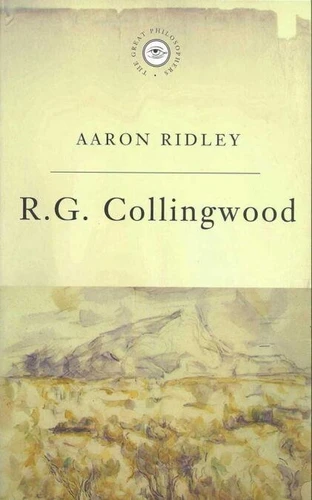
Aaron Ridley studied Philosophy at the universities of York and Cambridge. He is a Professor of Philosophy at the University of Southampton, and his research interests include aesthetics, the philosophy of music and Friedrich Nietzsche, topics on which he has published widely.
The Great Philosophers:Collingwood. Parliament Under Pressure
Par :Formats :
Disponible dans votre compte client Decitre ou Furet du Nord dès validation de votre commande. Le format ePub protégé est :
- Compatible avec une lecture sur My Vivlio (smartphone, tablette, ordinateur)
- Compatible avec une lecture sur liseuses Vivlio
- Pour les liseuses autres que Vivlio, vous devez utiliser le logiciel Adobe Digital Edition. Non compatible avec la lecture sur les liseuses Kindle, Remarkable et Sony
- Non compatible avec un achat hors France métropolitaine
 , qui est-ce ?
Notre partenaire de plateforme de lecture numérique où vous retrouverez l'ensemble de vos ebooks gratuitement
Pour en savoir plus sur nos ebooks, consultez notre aide en ligne ici
C'est si simple ! Lisez votre ebook avec l'app Vivlio sur votre tablette, mobile ou ordinateur :

- Nombre de pages80
- FormatePub
- ISBN978-1-78022-156-4
- EAN9781780221564
- Date de parution13/09/2011
- Protection num.Adobe DRM
- Infos supplémentairesepub
- ÉditeurWeidenfeld & Nicolson
Résumé
R. G. Collingwood 1889-1943Many philosophers have been interested in aesthetics, but Collingwood was passionate about art. His theories were never merely theoretical: aesthetics for him was a vivid, vibrant thing, to be experienced immediately in worked paint and in sculpted stone, in poetry and music. Art and life were no dichotomy for Collingwood - for how could you have one without the other? Works of art were created in and for the real world, to be enjoyed by real people, to enchant and enhance.
Aaron Ridley's fascinating introduction opens up the work of this most rewarding of aesthetic thinkers, tracing his thought from its philosophic origins through to its practical consequence and ethical implications. The man who saw art as 'the community's medicine for the worst disease of mind' had a sense of its urgent importance which we ignore at our peril today.
Aaron Ridley's fascinating introduction opens up the work of this most rewarding of aesthetic thinkers, tracing his thought from its philosophic origins through to its practical consequence and ethical implications. The man who saw art as 'the community's medicine for the worst disease of mind' had a sense of its urgent importance which we ignore at our peril today.