SOLDES
Jusqu'à -70% sur une sélection d'articles*
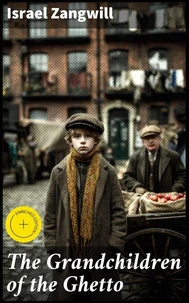
The Grandchildren of the Ghetto
Par :Formats :
Disponible dans votre compte client Decitre ou Furet du Nord dès validation de votre commande. Le format ePub est :
- Compatible avec une lecture sur My Vivlio (smartphone, tablette, ordinateur)
- Compatible avec une lecture sur liseuses Vivlio
- Pour les liseuses autres que Vivlio, vous devez utiliser le logiciel Adobe Digital Edition. Non compatible avec la lecture sur les liseuses Kindle, Remarkable et Sony
 , qui est-ce ?
Notre partenaire de plateforme de lecture numérique où vous retrouverez l'ensemble de vos ebooks gratuitement
Pour en savoir plus sur nos ebooks, consultez notre aide en ligne ici
C'est si simple ! Lisez votre ebook avec l'app Vivlio sur votre tablette, mobile ou ordinateur :

- Nombre de pages207
- FormatePub
- ISBN859-65--4731501-8
- EAN8596547315018
- Date de parution15/09/2022
- Protection num.Digital Watermarking
- Taille617 Ko
- Infos supplémentairesepub
- ÉditeurDIGICAT
Résumé
In "The Grandchildren of the Ghetto, " Israel Zangwill intricately weaves a tapestry of Jewish identity and cultural assimilation in early 20th-century London. Through a series of interlinked stories, the novel captures the lives of Jewish immigrants and their descendants as they navigate the tensions between tradition and modernity. Zangwill's use of vivid characterizations and sharp dialogue reflects the struggles of a community grappling with its place in a rapidly changing society, while also shedding light on broader themes of belonging, dislocation, and resilience during a time of considerable societal upheaval.
Israel Zangwill, a prominent figure in the early Zionist movement and an outspoken advocate for Jewish issues, drew heavily from his own experiences as a child of Eastern European immigrants. His background imbued him with a deep understanding of the complexities surrounding Jewish life and identity in the diaspora. A social activist and playwright, Zangwill's literary works often serve as both a reflection and critique of the socio-political realities of his time, making his narratives resonate with authenticity and urgency.
Readers seeking a profound exploration of cultural heritage, immigration, and the multifaceted nature of identity will find "The Grandchildren of the Ghetto" to be an insightful and compelling read. Zangwill's poignant storytelling not only entertains but also challenges the reader to reflect on the timeless questions of belonging and the immigrant experience, making this work an essential addition to the canon of Jewish literature.
Israel Zangwill, a prominent figure in the early Zionist movement and an outspoken advocate for Jewish issues, drew heavily from his own experiences as a child of Eastern European immigrants. His background imbued him with a deep understanding of the complexities surrounding Jewish life and identity in the diaspora. A social activist and playwright, Zangwill's literary works often serve as both a reflection and critique of the socio-political realities of his time, making his narratives resonate with authenticity and urgency.
Readers seeking a profound exploration of cultural heritage, immigration, and the multifaceted nature of identity will find "The Grandchildren of the Ghetto" to be an insightful and compelling read. Zangwill's poignant storytelling not only entertains but also challenges the reader to reflect on the timeless questions of belonging and the immigrant experience, making this work an essential addition to the canon of Jewish literature.
A propos de Israel Zangwill


Ghetto Tragedies
E-book
0,99 €
Without Prejudice
E-book
0,99 €
Jinny the Carrier
E-book
0,99 €
Italian Fantasies
E-book
0,99 €