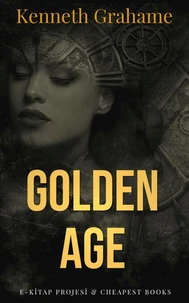
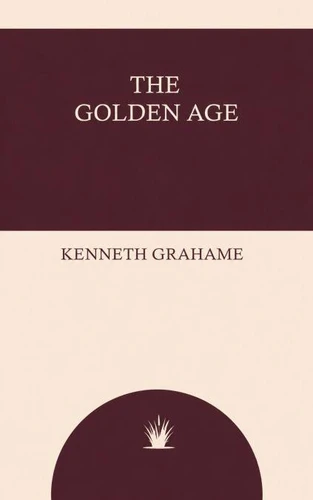
The Golden Age by Kenneth Grahame is a reflective and nostalgic collection of interconnected childhood memories that beautifully captures the imaginative inner world of children growing up in the English countryside. First published in 1895, the work is celebrated for its lyrical prose, emotional depth, and gentle exploration of youth, memory, and perception.
The narrative is told through the eyes of a grown narrator looking back on childhood experiences shared with his siblings and their interactions with the adult world.
These recollections are not presented as a continuous plot but rather as a series of vivid episodes that blend reality with imagination, shaping a richly textured portrait of early life.
Within these memories, the children inhabit a world that feels both ordinary and magical. Their daily experiences are filled with adventure, curiosity, and emotional intensity as they interpret the adult world in ways that are often misunderstood by those around them.
The contrast between childhood perception and adult behavior becomes a central theme throughout the work.
Kenneth Grahame uses elegant and poetic language to evoke the emotional landscape of childhood. His writing captures the sense of wonder, confusion, and discovery that defines early life, while also reflecting on the passage of time and the loss of innocence that comes with growing up.
The collection explores themes such as imagination, family dynamics, emotional sensitivity, and the shifting boundary between childhood and adulthood.
It also reflects on how memory reshapes experience, turning ordinary moments into lasting impressions colored by emotion and reflection.
Rather than focusing on dramatic events, The Golden Age emphasizes mood, atmosphere, and introspection. The simplicity of the children's experiences is elevated through Grahame's descriptive style, which highlights the richness of their inner lives.
This work is often regarded as a poetic meditation on childhood, offering readers a deeply nostalgic and emotionally resonant perspective on early life and memory.
Ideal for readers of classic literature, literary memoir, and reflective fiction, The Golden Age remains a timeless exploration of innocence, imagination, and the enduring power of memory.
The Golden Age by Kenneth Grahame is a reflective and nostalgic collection of interconnected childhood memories that beautifully captures the imaginative inner world of children growing up in the English countryside. First published in 1895, the work is celebrated for its lyrical prose, emotional depth, and gentle exploration of youth, memory, and perception.
The narrative is told through the eyes of a grown narrator looking back on childhood experiences shared with his siblings and their interactions with the adult world.
These recollections are not presented as a continuous plot but rather as a series of vivid episodes that blend reality with imagination, shaping a richly textured portrait of early life.
Within these memories, the children inhabit a world that feels both ordinary and magical. Their daily experiences are filled with adventure, curiosity, and emotional intensity as they interpret the adult world in ways that are often misunderstood by those around them.
The contrast between childhood perception and adult behavior becomes a central theme throughout the work.
Kenneth Grahame uses elegant and poetic language to evoke the emotional landscape of childhood. His writing captures the sense of wonder, confusion, and discovery that defines early life, while also reflecting on the passage of time and the loss of innocence that comes with growing up.
The collection explores themes such as imagination, family dynamics, emotional sensitivity, and the shifting boundary between childhood and adulthood.
It also reflects on how memory reshapes experience, turning ordinary moments into lasting impressions colored by emotion and reflection.
Rather than focusing on dramatic events, The Golden Age emphasizes mood, atmosphere, and introspection. The simplicity of the children's experiences is elevated through Grahame's descriptive style, which highlights the richness of their inner lives.
This work is often regarded as a poetic meditation on childhood, offering readers a deeply nostalgic and emotionally resonant perspective on early life and memory.
Ideal for readers of classic literature, literary memoir, and reflective fiction, The Golden Age remains a timeless exploration of innocence, imagination, and the enduring power of memory.

 , qui est-ce ?