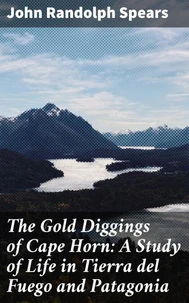
The Gold Diggings of Cape Horn: A Study of Life in Tierra del Fuego and Patagonia
Par :Formats :
Disponible dans votre compte client Decitre ou Furet du Nord dès validation de votre commande. Le format ePub est :
- Compatible avec une lecture sur My Vivlio (smartphone, tablette, ordinateur)
- Compatible avec une lecture sur liseuses Vivlio
- Pour les liseuses autres que Vivlio, vous devez utiliser le logiciel Adobe Digital Edition. Non compatible avec la lecture sur les liseuses Kindle, Remarkable et Sony
 , qui est-ce ?
Notre partenaire de plateforme de lecture numérique où vous retrouverez l'ensemble de vos ebooks gratuitement
Pour en savoir plus sur nos ebooks, consultez notre aide en ligne ici
C'est si simple ! Lisez votre ebook avec l'app Vivlio sur votre tablette, mobile ou ordinateur :

- Nombre de pages1881
- FormatePub
- ISBN859-65--4720942-3
- EAN8596547209423
- Date de parution04/09/2022
- Protection num.Digital Watermarking
- Taille2 Mo
- Infos supplémentairesepub
- ÉditeurDIGICAT
Résumé
In "The Gold Diggings of Cape Horn: A Study of Life in Tierra del Fuego and Patagonia, " John Randolph Spears explores the often-misunderstood socio-economic landscape of this remote region during the mid-19th century. Through vivid descriptions and keen observations, Spears employs a narrative style that blends travelogue and ethnography, bringing to life the harsh realities and vibrant cultures of Tierra del Fuego and Patagonia.
His work serves as a critical historical document, capturing the tumultuous interactions between indigenous populations and the influx of fortune-seekers drawn by the gold rush, as well as the environmental challenges posed by colonial aspirations in these untamed territories. John Randolph Spears, an American journalist and historian, traveled extensively in South America, which deeply influenced his perspective on the geopolitical currents of his time.
His firsthand experiences and rigorous research allowed him to write with authority about the lives of those living on the fringes of civilization during a pivotal era. Spears's background in shipping and maritime pursuits uniquely positioned him to appreciate the complexities of life in a region where the sea and gold served as both opportunity and peril. This book is a compelling read for anyone interested in the intersection of culture, economics, and colonialism in the 19th century.
Spears's astute observations and engaging prose not only illuminate the historical context but also offer timeless reflections on human ambition and resilience, making it essential for historians, anthropologists, and curious travelers alike.
His work serves as a critical historical document, capturing the tumultuous interactions between indigenous populations and the influx of fortune-seekers drawn by the gold rush, as well as the environmental challenges posed by colonial aspirations in these untamed territories. John Randolph Spears, an American journalist and historian, traveled extensively in South America, which deeply influenced his perspective on the geopolitical currents of his time.
His firsthand experiences and rigorous research allowed him to write with authority about the lives of those living on the fringes of civilization during a pivotal era. Spears's background in shipping and maritime pursuits uniquely positioned him to appreciate the complexities of life in a region where the sea and gold served as both opportunity and peril. This book is a compelling read for anyone interested in the intersection of culture, economics, and colonialism in the 19th century.
Spears's astute observations and engaging prose not only illuminate the historical context but also offer timeless reflections on human ambition and resilience, making it essential for historians, anthropologists, and curious travelers alike.