SOLDES
Jusqu'à -70% sur une sélection d'articles*

Nouveauté
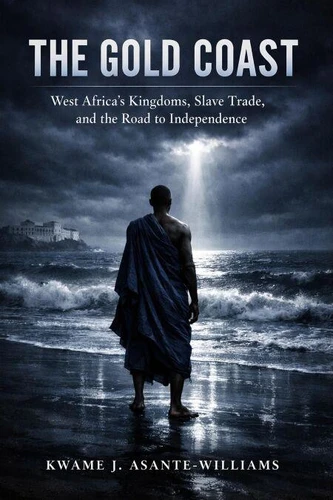
The Gold Coast: West Africa's Kingdoms, Slave Trade, and the Road to Independence
Par :Formats :
Disponible dans votre compte client Decitre ou Furet du Nord dès validation de votre commande. Le format ePub est :
- Compatible avec une lecture sur My Vivlio (smartphone, tablette, ordinateur)
- Compatible avec une lecture sur liseuses Vivlio
- Pour les liseuses autres que Vivlio, vous devez utiliser le logiciel Adobe Digital Edition. Non compatible avec la lecture sur les liseuses Kindle, Remarkable et Sony
 , qui est-ce ?
Notre partenaire de plateforme de lecture numérique où vous retrouverez l'ensemble de vos ebooks gratuitement
Pour en savoir plus sur nos ebooks, consultez notre aide en ligne ici
C'est si simple ! Lisez votre ebook avec l'app Vivlio sur votre tablette, mobile ou ordinateur :

- FormatePub
- ISBN8235356085
- EAN9798235356085
- Date de parution04/06/2026
- Protection num.pas de protection
- Infos supplémentairesepub
- ÉditeurIoakim Ioakim
Résumé
The world you live in was built on a history most people were never properly told. Beneath the church at Cape Coast Castle, in dungeons cut from solid rock, hundreds of captive Africans were held in total darkness while British officers worshipped directly overhead. The church and the dungeon were not a contradiction. They were the point. For four centuries, this system produced the wealth that built empires, funded industrialization, and made the modern West possible.
The people in those dungeons paid for all of it. But this story does not begin at Cape Coast Castle. It begins a thousand years earlier, in a city called Kumbi Saleh, at the southern edge of the Sahara, where caravans arrived carrying gold in quantities that reduced experienced merchants to silence. It begins with the Mali Empire, whose fourteenth-century ruler Mansa Musa was so wealthy that when he traveled to Mecca with 80 camel-loads of gold, his generosity along the route depressed the price of gold across the entire Mediterranean for a decade.
It begins in the libraries of Timbuktu, where 700, 000 manuscripts captured centuries of scholarship in mathematics, law, medicine, and philosophy. It begins with the Asante Golden Stool, called down from the sky by a priest named Komfo Anokye in 1701, carrying the soul of an entire nation inside it, surviving everything the British sent against it. The Gold Coast traces the full arc: from these civilizations through the arrival of Portuguese ships in 1471, through the 12.5 million Africans transported across the Atlantic in conditions no court today would permit for livestock, through the only successful slave revolution in recorded history, through a colonial system that restructured an entire continent to serve European profit, to the midnight of March 6, 1957, when Kwame Nkrumah stood before hundreds of thousands of people in Accra and said: "The black man is capable of managing his own affairs."Between those two points lies everything worth knowing.
The sixty-year-old queen mother Yaa Asantewaa who shamed her chiefs into fighting rather than surrendering and led the last Asante war against Britain herself. The cocoa farmers who organized a total trade boycott in 1937 and brought British commercial interests to their knees without firing a single shot. The Haitian revolutionaries who defeated Napoleon's army and then paid France 122 years of reparations for winning.
The scholars, the resisters, the griots, the activists, and the ordinary people who kept a culture alive across four centuries of systematic assault on its existence. This is not a book about victimhood. The history here is too complex, too defiant, and too consequential for that frame. It is a book about power: who accumulated it, who seized it, how it was stripped away, and how it was taken back.
It is a book about what happens to the historical record when those writing it have something to conceal. It is a book that makes the modern world legible in ways that sanitized accounts cannot. You have heard fragments of this story. You have not heard it whole, in sequence, and with its full weight laid honestly before you. Until now. THE GOLD COAST: West Africa's Kingdoms, Slave Trade, and the Road to Independence Kwame J.
Asante-Williams
The people in those dungeons paid for all of it. But this story does not begin at Cape Coast Castle. It begins a thousand years earlier, in a city called Kumbi Saleh, at the southern edge of the Sahara, where caravans arrived carrying gold in quantities that reduced experienced merchants to silence. It begins with the Mali Empire, whose fourteenth-century ruler Mansa Musa was so wealthy that when he traveled to Mecca with 80 camel-loads of gold, his generosity along the route depressed the price of gold across the entire Mediterranean for a decade.
It begins in the libraries of Timbuktu, where 700, 000 manuscripts captured centuries of scholarship in mathematics, law, medicine, and philosophy. It begins with the Asante Golden Stool, called down from the sky by a priest named Komfo Anokye in 1701, carrying the soul of an entire nation inside it, surviving everything the British sent against it. The Gold Coast traces the full arc: from these civilizations through the arrival of Portuguese ships in 1471, through the 12.5 million Africans transported across the Atlantic in conditions no court today would permit for livestock, through the only successful slave revolution in recorded history, through a colonial system that restructured an entire continent to serve European profit, to the midnight of March 6, 1957, when Kwame Nkrumah stood before hundreds of thousands of people in Accra and said: "The black man is capable of managing his own affairs."Between those two points lies everything worth knowing.
The sixty-year-old queen mother Yaa Asantewaa who shamed her chiefs into fighting rather than surrendering and led the last Asante war against Britain herself. The cocoa farmers who organized a total trade boycott in 1937 and brought British commercial interests to their knees without firing a single shot. The Haitian revolutionaries who defeated Napoleon's army and then paid France 122 years of reparations for winning.
The scholars, the resisters, the griots, the activists, and the ordinary people who kept a culture alive across four centuries of systematic assault on its existence. This is not a book about victimhood. The history here is too complex, too defiant, and too consequential for that frame. It is a book about power: who accumulated it, who seized it, how it was stripped away, and how it was taken back.
It is a book about what happens to the historical record when those writing it have something to conceal. It is a book that makes the modern world legible in ways that sanitized accounts cannot. You have heard fragments of this story. You have not heard it whole, in sequence, and with its full weight laid honestly before you. Until now. THE GOLD COAST: West Africa's Kingdoms, Slave Trade, and the Road to Independence Kwame J.
Asante-Williams